Nothing is more frustrating than a gel that flakes the moment your hair dries, leaves a crunch that will not soften, or drags your curls into a flat, greasy mess by day two. With low porosity hair, that is usually not a bad gel. It is the formula sitting on top of a tightly packed cuticle instead of working with it.
Working with my friend, a hair scientist and cosmetic formulator with a PhD in chemistry, I dug into what actually makes a gel perform on low porosity hair, so you can choose by how a formula behaves instead of by marketing claims.
The best gels for low porosity hair are lightweight, water-based formulas that hold with film-forming polymers and skip the heavy oils and butters that build up on a cuticle that does not absorb them. Get the formula right and you get definition, volume, and long-lasting curls without flaking, crunch, or buildup.
What Makes a Gel Good for Low Porosity Hair?
A good gel for low porosity hair holds your curls with lightweight, film-forming polymers and spreads in a thin, even layer instead of coating the surface. Low porosity hair has a flat, tightly packed cuticle, so anything heavy tends to sit on top rather than sink in, which is where the coated, flaky, weighed-down feeling comes from. [1,2]
The polymers (names like VP/VA copolymer, acrylates copolymer, and the polyquaterniums) are what form the flexible cast that defines curls and fights frizz. A thickener like carbomer controls how evenly the gel spreads, which matters more on low porosity hair because uneven product is what flakes.
Humectants such as glycerin help curls stay flexible, while oils and butters are the part to keep light, since they are the most likely to build up.
So the best gel is not the richest or the strongest. It is the one that distributes evenly, holds with a clean polymer film, and leaves your curls defined and soft rather than stiff and coated.
Best Gels for Low Porosity Hair (Quick Picks)
Short on time? Start here. Each of these is lightweight enough to minimize buildup and defines curls without sitting on the hair.
- Best lightweight gel: Curl Keeper Original Liquid Styler
- Best strong hold: Aussie Instant Freeze Gel
- Best medium hold: MopTop Anti-Frizz Medium Hold Gel
- Best protein-free: Jessicurl Spiralicious
- Best for drier low porosity hair: Mielle Honey & Ginger Styling Gel
Who These Gels Are Best For
These picks are worth a look if your hair:
- Falls flat or loses volume quickly
- Feels coated or heavy after styling
- Seems to resist products or take a while to take them in
- Gets buildup easily
- Needs definition without stiffness
Top 13 Gels for Low Porosity Hair
Each gel below was chosen for how its formula works with low porosity hair: lightweight polymers for hold, balanced humectants, and a light hand with oils and butters so you get definition without weighing the hair down.
Instead of listing every ingredient, I have pointed out the one or two that actually explain how each gel behaves. Formulas change, so always check the current label, and verify size, since it can vary by retailer.
1. Curl Keeper Original Liquid Styler
A true water-based styler, which makes it a strong match for low porosity hair. The hold comes from VP/VA copolymer, the lightweight film-forming polymer covered below, which lays down a flexible layer that defines curls and controls frizz without feeling stiff. Because that film re-activates with water, you refresh your curls by adding water instead of layering on more product. That is the real advantage here: definition and hold without constant buildup.
Highlights: Lightweight, water-based, minimal buildup

2. ECO Style Styling Gel with Olive Oil
The strong hold here comes from PVP and carbomer, which form a firm cast that keeps curls defined for longer. The olive oil adds shine, but on low porosity hair a heavier oil like this tends to sit on the surface rather than absorb, so it can help with shine for some and lead to a coated feel for others. The trade-off is hold versus weight: use a small amount, keep it off the roots, and you get the cast without the heaviness.
Highlights: Strong hold, contains protein, best for thicker curls
Ingredients: Water/Aqua/Eau, Carbomer, Triethanolamine, Hydrolyzed Wheat Protein, Pvp, Glycerin, Sodium Hydroxymethylglycinate, Polysorbate 20, Tetrasodum Edta, Olea Europaea (Olive) Fruit Oil), Fragrance (Parfum), Ci19140 Yellow 5.

3. Jessicurl Spiralicious
This one stands out because it delivers strong hold without glycerin or added protein, which can suit low porosity hair that builds up or feels overloaded easily. The hold comes from Polyquaternium-69, a flexible film-forming polymer that locks in curl shape and reduces frizz without a stiff, coated feel. Being glycerin-free also makes it more predictable across climates, so you are less likely to fight humidity frizz or dry-air stiffness from wash day to day three.
Highlights: Protein-free, glycerin-free, medium to strong hold
Ingredients: Aqua (Water), Polyquaternium-69, Hydroxyethylcellulose, Simmondsia Chinensis (Jojoba) Seed Oil, C12-15 Alkyl Benzoate, Panthenol, Polyquaternium-11, Diazolidinyl Urea, Iodopropynyl Butylcarbamate, Alcohol.

4. Aussie Instant Freeze Gel
Known for a strong, long-lasting cast that resists humidity, thanks to a blend of acrylates copolymers that lock curls in place once the gel dries. For low porosity hair this works well when you apply it to wet hair and use a moderate amount; too much leaves the hair stiff or coated. It also includes a little aloe and jojoba to soften the feel once you scrunch out the cast.
Highlights: Strong hold, humidity-resistant, long-lasting

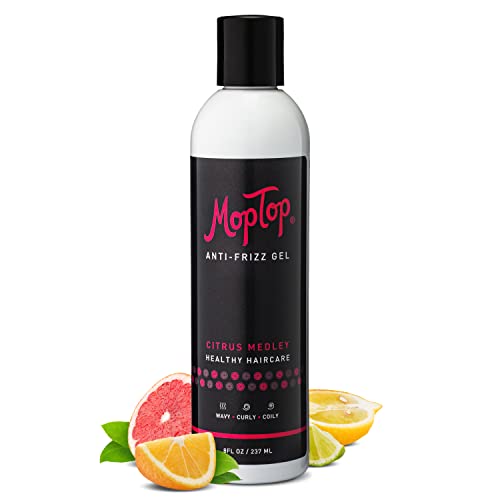
5. MopTop Anti-Frizz Medium Hold Gel
A medium hold that leans toward frizz control and softness rather than a firm cast. It pairs lightweight polymers (Polyquaternium-4 and -10) with humectants like aloe, honey derivatives, and panthenol, so curls stay defined and flexible without feeling heavy. A good pick if stronger gels leave your hair dry or brittle, and you want control without stiffness.
Highlights: Medium hold, lightweight feel, frizz control
6. Curls Blueberry Bliss Jelly
This jelly leans moisturizing rather than strong-hold, combining a Polyacrylate-14 film with humectants, proteins, and oils and butters. The glycerin and aloe support flexibility and the proteins add structure, but the hydrogenated castor oil, shea, mango, and argan are where low porosity hair has to be careful, since heavier ingredients can sit on top and build up. It gives soft, bouncy definition when you use lighter amounts and clarify when needed.
Highlights: Soft hold with definition, contains protein, richer formula


7. Camille Rose Curl Maker
A lightweight, botanical formula built around pectin and marshmallow root for slip and curl clumping rather than a hard cast. Because it does not rely on thick oils or butters, it creates a light film that enhances shape while keeping curls touchable, which suits low porosity hair. The trade-off is hold: if your hair falls flat, you may want a stronger gel on top, but for soft definition with minimal buildup it is a great option.
Highlights: Lightweight, botanical, great for clumping

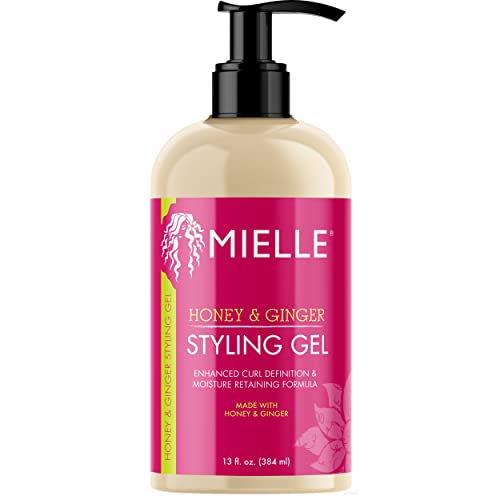
8. Mielle Organics Honey & Ginger Styling Gel
This one sits between moisture and hold, pairing humectants (honey, glycerin) with an acrylates copolymer film. Helpful if your hair feels dry or lacks flexibility. The trade-off is weight: it also includes coconut, babassu, and shea, which can sit on the surface if you use too much. Apply a lighter amount and distribute evenly to avoid buildup.
Highlights: Medium hold, richer formula, best for drier hair
9. Innersense Organic Beauty Natural I Create Hold Gel
Built around hydroxyethylcellulose and a maltodextrin copolymer, film-formers that give a firm, flexible hold while keeping the formula lightweight in feel, with none of the heavy oils that sit on low porosity hair. Aloe, glycerin, and honey extract keep curls flexible. Because it leans on humectants, performance shifts with your climate, so start with a small amount on wet hair and build gradually to protect your root volume.
Highlights: Firm, flexible hold, lightweight feel, humectant-rich

10. Curlsmith Curl Defining Styling Soufflé
A strong hold with a moisture-heavy base. Film-formers create a firm cast that softens once you scrunch it out, while glycerin, babassu, avocado, and shea keep curls shiny and flexible. For low porosity hair this is a double-edged sword: real moisture and definition, but the heavier ingredients can sit on top if you overapply. Use it on very wet hair and keep the layers light.
Highlights: Medium hold, richer base, long-lasting definition

#11 The Doux BIG POPPA Curl Defining Gel for Curly Hair
A humidity-resistant gel that aims for strong definition with a flexible, non-crunchy finish. A polymer blend plus babassu oil for slip helps it spread evenly, which reduces the patchy, uneven coating low porosity hair is prone to. The film is stable in changing humidity, so curls hold their shape longer. As with any stronger gel, too much will feel heavy, so use a moderate amount.
Highlights: Strong hold, humidity-resistant, flexible finish

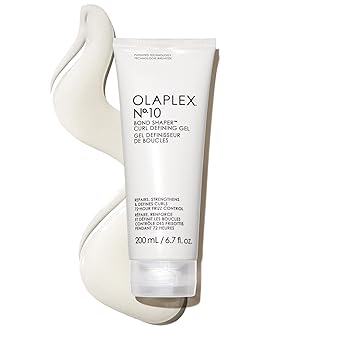
#12 Olaplex Nº.10 Bond Shaper™ Curl Defining Gel
A lightweight, flexible gel that uses humidity-resistant film-formers for definition and frizz control without a stiff cast. It is also marketed to support the hair’s internal bonds, though that bond-repair claim is still debated, so treat it as a nice extra rather than the reason to buy. What makes it a solid low porosity pick is the light hold and the fact that it is protein-free, which helps if your hair feels stiff or overloaded easily.
Highlights: Lightweight flexible hold, protein-free
#13 Rizos Curls Strong Hold Gel
A lightweight, water-based gel that suits low porosity hair well. The hold comes from clean film-formers, Sodium Polyitaconate, AMP-Acrylates Copolymer, and Polyurethane-14, thickened with carbomer so it spreads evenly and sets into a flexible, flake-free finish instead of a stiff cast. There are no heavy oils or butters to sit on the surface, and it is protein-free, which helps if your hair feels stiff or overloaded easily. It does lean on humectants (glycerin, sorbitol, and aloe), so how it behaves can shift with the humidity around you; if you notice frizz in damp weather, that is the glycerin at work.
Want firmer hold from the same line? Rizos Curls Strong Hold Gel holds with Polyquaternium-69 and an acrylates crosspolymer, also water-based and flake-free, with a touch of vegan collagen peptide, so it carries a little protein, which low porosity hair handles fine in small amounts.
Highlights: Lightweight, water-based, flake-free, protein-free

Low Porosity Gel Comparison: Hold, Key Ingredient, Best For
A quick way to scan the picks by how they hold and what drives the formula.
| Gel | Hold | Key Ingredient | Best For |
| Curl Keeper Original | Light, flexible | VP/VA copolymer | Water-based definition, refresh with water |
| ECO Style Olive Oil | Strong | PVP + carbomer (+ olive oil) | Strong hold; use sparingly |
| Jessicurl Spiralicious | Medium-strong | Polyquaternium-69 | Protein-free, glycerin-free, climate-stable |
| Aussie Instant Freeze | Strong | Acrylates copolymers | Humidity-resistant hard cast |
| MopTop Medium Hold | Medium | Polyquats + humectants | Soft, flexible, frizz control |
| Curls Blueberry Bliss | Soft | Polyacrylate-14 (+ oils/butters) | Moisture + definition; lighter amounts |
| Camille Rose Curl Maker | Light | Pectin, marshmallow root | Slip and clumping, soft finish |
| Mielle Honey & Ginger | Medium | Acrylates (+ honey, oils) | Drier hair; watch the weight |
| Innersense I Create Hold | Firm, flexible | Hydroxyethylcellulose + maltodextrin | Lightweight, no heavy oils |
| Curlsmith Souffle | Medium | Film-formers (+ glycerin, oils) | Hold + moisture; apply light |
| The Doux Big Poppa | Strong, flexible | Polymer blend + babassu slip | Even application, humidity resistance |
| Olaplex No.10 | Light, flexible | Film-formers + bond tech | Protein-free, soft flexible hold |
| Rizos Curls Light Hold | Light, flexible | Sodium polyitaconate + AMP-acrylates | Lightweight, water-based, protein-free |
A note on “protein-free.” That label is a neutral description of the formula, not a sign that protein is bad or that protein-free is better. No single ingredient makes a gel good or bad for low porosity hair. It is flagged only for people who have found their hair feels stiff with frequent protein, the same way “glycerin-free” is noted for anyone who reacts to humidity swings. See the protein section below to decide what your hair actually wants.
What Is Low Porosity Hair?
Hair porosity describes how easily water and product move into and out of the strand through the cuticle, the shingle-like outer layer. It sits on a spectrum and reflects the condition of the cuticle more than a fixed category you are locked into. Low porosity hair has a cuticle that lies flat and tightly packed, so it is usually healthy and minimally damaged, but that smooth, closed surface also makes it slower to take in water and product. [3]
High porosity hair is the opposite: a lifted, worn cuticle that lets water and product move in and out quickly. None of this is about literal pores. Hair does not have open holes; water moves through the cuticle by diffusion, and a flatter, tighter cuticle simply slows that exchange.
That is why low porosity hair often feels like products sit on top, takes a while to fully wet, and takes just as long to dry. The ends are usually a little more permeable than the roots, since daily wear, brushing, and sun gradually open the cuticle over time.
How to Choose a Gel for Low Porosity Hair
The main challenge with low porosity hair is not a lack of moisture. It is managing how products interact with a cuticle that does not readily absorb them. Because the surface stays closed, products tend to sit on top, which is why some gels feel sticky, heavy, or flaky. A well-formulated low porosity gel solves that with how it is built, not just how strong it is:
- Styling (fixative) polymers: the backbone. Low to medium molecular weight polymers form a thin, even film that holds curls without excess stiffness or flaking.
- Thickening polymers: control the texture so the gel spreads evenly. Even spread is what keeps product from clumping and flaking on a surface that does not absorb.
- Humectants: glycerin, propanediol, and similar ingredients help curls stay flexible. Balance matters, since too much can leave a sticky or coated feel.
- Emollients: oils and butters smooth and add shine, but they sit on the surface of low porosity hair, so lighter forms and smaller amounts work best.
- Preservatives: keep the formula safe and stable. They are necessary, not something to fear.
Key Ingredients to Look for in Gels for Low Porosity Hair
Once you know what each ingredient does, it gets much easier to pick a gel that defines without flaking, stiffness, or buildup. Here is what is actually doing the work.
Styling Polymers
Styling polymers are the foundation of any gel. They form a thin, flexible film around the strand, and as the gel dries that film sets the curl pattern so it does not fall limp. The quality of the film is what makes curls feel soft and defined versus stiff and flaky. For low porosity hair this matters even more, because products sit on the surface, so the film needs to be lightweight and even.
One of the earliest styling polymers, PVP, holds well but tends to flake as it dries and loses hold in humidity. [4] Newer polymers form smoother, more consistent films, which is what you want on low porosity hair. Look for acrylates copolymer, VP/VA copolymer, Polyquaternium-11, and Polyquaternium-69.
You may also see it claimed that PVP “blocks moisture” and dries your hair out. That is a misread of how film-formers work. PVP forms a film like every styling polymer does; its real drawback is cosmetic, it can flake and soften in humidity, not that it dehydrates the strand. Your hair’s water content is set by the humidity around you, not by a film sitting on the surface, so PVP is nothing to fear. Newer polymers are simply suggested because they flake less and hold better.
Thickening Agents
Thickeners control how a gel feels and spreads. Because product sits on the surface of low porosity hair, even spread is the difference between clean definition and patchy flaking. Carbomer is the most common, giving a smooth, stable, transparent texture that helps the polymer film form evenly.
Natural thickeners like xanthan gum also work but give a softer, less structured hold. The takeaway: a gel that spreads in a thin, even layer will always perform better on low porosity hair than one that clumps.
Moisturizing Ingredients (Humectants)
Low porosity hair does not struggle to hold water; it struggles to take it in. Humectants like glycerin, propylene glycol, and propanediol attract water and help curls stay soft and flexible, which supports elasticity and curl formation. How much water they pull in depends on the humidity around you, not just the product, so the same gel can behave differently in dry versus humid weather.
Newer humectants are worth knowing too. [5] Betaine binds water while keeping a soft feel, sodium or zinc PCA are effective and lightweight, and propanediol hydrates without the tacky feel glycerin can leave. The key is balance: enough to keep curls flexible, not so much that the gel feels sticky or coated.
Emollients
Emollients smooth the surface, cut friction, and add shine by coating the strand. On low porosity hair they do not absorb, so they sit on top. In small amounts that can be a good thing, especially on the ends, where everyday wear leaves the cuticle more worn. In excess or in heavier forms, they are the most common cause of a coated, weighed-down feel. Oils and butters like coconut, sunflower, avocado, olive, and shea show up in plenty of gels; on low porosity hair they work best in lighter amounts or in water-based formulas. Heavier is not better here.
Preservatives
Preservatives stop the growth of bacteria, mold, and yeast, which is essential in any water-based product. They are regulated and used at very low levels, and they are not something to avoid on principle. Some people are individually sensitive to specific preservatives, and if that is you, gentler systems like sodium benzoate and potassium sorbate are easy to find. But the goal is to match your own tolerance, not to treat preservatives as harmful. A well-preserved gel is a safe gel.
Fragrance
Fragrance does not change how a gel performs, but it can affect how your scalp and skin respond if you are sensitive. Both synthetic blends and natural essential oils can irritate some people, and natural does not automatically mean gentler, since essential oils are active compounds too. If your scalp reacts easily, reach for fragrance-free or lightly scented formulas. Otherwise, fragrance is a personal preference rather than a performance factor.
How to Apply Gel to Low Porosity Hair (Without Flaking)
On low porosity hair, technique matters as much as the gel. Because product sits on the surface, even distribution is what separates clean definition from patchy flakes.
- Start on soaking-wet hair. Gel needs water to spread into a thin, even film. Applying to dripping or very damp hair helps it distribute instead of clumping.
- Emulsify a small amount first. Rub the gel between your palms, then rake it through and scrunch. Less than you think is the rule; you can always add more.
- Keep your layers simple. Stacking several heavy creams or oils under a strong gel is a common cause of flaking, since incompatible films do not bond and rub off white.
- Let it dry fully, then scrunch out the cast. A hard cast is the gel working. Once hair is completely dry, scrunch with your hands (or a little oil) and the crunch breaks into soft, defined curls.
- Refresh with water, not more product. Many gels re-activate with water, so a light mist and scrunch revives day-two curls without adding buildup.
Prefer to watch? These two short tutorials walk through the same technique on different textures, so you can follow along on hair close to yours.
Why Does My Gel Flake or Feel Crunchy?
These two get blamed on the gel, but they are usually about how it is used, and they are not the same thing.
Crunch is normal and not a problem. A gel cast is supposed to feel hard when it dries. That stiffness means the film set and your curls are protected. Once hair is fully dry, scrunch the cast out and the curls underneath are soft and defined. Crunch is the gel doing its job, not a sign you used the wrong one.
Flaking is different. White flakes usually mean too much product, gel that was not emulsified and spread evenly, or incompatible layers, like a rich, oily leave-in under a strong polymer gel that do not bond and flake off as they dry. Low porosity hair is more prone to this because everything sits on the surface.
The fixes are simple: use less, apply to wetter hair, simplify your layers so they are compatible, and clarify if buildup has accumulated. For more on getting a clean, defined cast, see why you are not getting a gel cast.
Should You Use a Gel with Protein or Protein-Free?
It is not as simple as protein being bad for low porosity hair. Gels with protein can reinforce the strand, improve elasticity, and support curl definition, but the effect depends on the type, the amount, and how often you use it.
The common advice is to avoid protein because a tightly packed cuticle makes it harder for ingredients to penetrate. The nuance: low porosity hair does not need to avoid protein, it needs the right amount. In small to moderate levels, protein can sit along the fiber and strengthen weak spots, which helps if your ends are more worn or your hair feels limp. The issue is only when it builds up on the surface and leaves hair stiff or dry.
A simple way to decide: if your hair feels soft but will not hold a style, a gel with some protein may help. If it feels stiff, dry, or brittle, a protein-free gel is the better call. For a deeper breakdown, see my guide to the best proteins for low porosity hair.
Frequently Asked Questions
Does low porosity hair need gel?
No, but gel is one of the most reliable ways to get definition and lasting hold. Choose a lightweight, water-based formula so it defines without sitting on top of the hair.
Why does my gel flake?
Usually too much product, uneven application, or incompatible layers underneath. Use less, apply to wetter hair, keep your layers simple, and clarify if buildup has built up over time.
How do I refresh low porosity curls on day two?
Lightly mist with water and scrunch. Many gels re-activate with water, so you can revive curls without adding more product. A tiny bit of a water-based styler helps if you need extra hold.
Can I use a gel with protein on low porosity hair?
Yes. Low to moderate protein is fine and can add structure. Go by feel: back off if your hair starts to feel stiff or dry, and rotate in a protein-free gel.
Will glycerin make my hair frizz?
It can pull in extra water in very humid weather, which some people notice as frizz. If that is you, try a glycerin-free gel like Jessicurl Spiralicious. There is no need for strict dew-point rules; just notice how your hair responds and adjust.
Key Takeaways
- Low porosity hair styles best with lightweight, water-based gels that hold with film-forming polymers.
- The hold comes from polymers (VP/VA, acrylates, polyquaterniums); a thickener like carbomer controls even spread.
- Heavy oils and butters sit on the surface and can build up, so keep them light or skip them in your gel.
- Crunch is normal and scrunches out. Flaking means too much product or incompatible layers, not a bad gel.
- Apply to soaking-wet hair, use less than you think, and keep your layers simple.
- Protein is fine in low to moderate amounts; choose by how your hair feels.
References
- Corbett JF. The Chemistry of Hair-care Products. Journal of the Society of Dyers and Colourists. 1976;92(8):285-303.
- Zviak C. The Science of Hair Care. Taylor & Francis; 1986.
- Hessefort YZ, Holland BT, Cloud RW. True porosity measurement of hair: a new way to study hair damage mechanisms. J Cosmet Sci. 2008;59(4):303.
- Robbins CR. Chemical and Physical Behavior of Human Hair. 4th ed. Springer; 2002.
- Schueller R, Romanowski P. Conditioning Agents for Hair and Skin. Taylor & Francis; 1999.
Keep Reading
- A Complete Care Guide for Low Porosity Hair
- How to Moisturize Low Porosity Hair: What Actually Works
- Curl Creams for Low Porosity Hair
- Deep Conditioners for Low Porosity Hair
- Best Leave-In Conditioners for Low Porosity Hair
- Penetrating Oils for Low Porosity Hair
- Best Proteins for Low Porosity Hair
- Why You Are Not Getting a Gel Cast