If you have low porosity hair, you have probably been taught to treat it like a fortress: cuticles “sealed shut,” moisture that cannot get in, conditioners that need heat, steam, or special penetrating ingredients to break through.
Here is the truth that changes how you shop: low porosity hair is not moisture-resistant hair. It is healthy hair. A smooth, intact, flat-lying cuticle is exactly what hair looks like when it has not been damaged, and it is the condition every repair product on the shelf is trying to give back to people who lost it. [1]
And here is the part almost nobody says out loud: no conditioner adds water to your hair anyway. Your hair’s water content is set by the humidity around you, not by what you rinse out in the shower. [2] What a great conditioner actually does is deposit conditioning agents that smooth the surface, add slip, kill static, and make hair softer and easier to detangle. [3] That is true for every porosity. The only real low porosity question is weight: how much conditioning your hair wants before it starts to feel coated.
So this guide skips the fortress mythology. Below are 17 rinse-out conditioners that suit low porosity hair, explained ingredient by ingredient, plus the short science of what a conditioner can and cannot do. Wherever you are in your natural hair journey, the goal is the same: lighter formulas, honest expectations, smarter trial and error.
Short answer: the best conditioner for low porosity hair is a lightweight, water-based formula built on cationic conditioning agents (like behentrimonium methosulfate or behentrimonium chloride) and fatty alcohols, with light oils and humectants further down the list. It will not “add moisture,” because no conditioner can; it conditions the surface so hair feels soft, detangles easily, and resists frizz. Apply it mid-length to ends, give it a few minutes, rinse well, and use a smaller amount than the bottle suggests.
What Does Low Porosity Actually Mean? (Not What You Were Told)

Hair porosity describes how easily water and product move into and out of a strand through the cuticle. All hair is permeable to water to some degree; what differs is how quickly that water moves in and out, which comes down to the condition of the cuticle. [1]
Low porosity means your cuticle layers are smooth, intact, and lying flat, so water and product move in and out slowly and tend to sit on the surface at first. That is it.
It is not a fixed hair type you were born into and must forever match products to; it is a description of cuticle condition, and it is the good end of the spectrum. Damage (bleach, color, heat, friction) is what raises and chips the cuticle and pushes hair toward high porosity. [1,4]
Three follow-on myths fall apart once you see this clearly:
- “Low porosity hair is moisture-deficient.” No. Water content in hair tracks ambient humidity, and damaged hair actually has a higher affinity for water, not lower. [2] Low porosity hair that feels dry or rough is usually dealing with buildup, mechanical roughness, or simply not enough conditioning agent on the surface, not a water shortage products could fix.
- “You have to force products in.” Conditioners are designed to work on the surface. Their positively charged ingredients bind to the hair’s negatively charged outer layer, smooth it, and lubricate it. [3] You do not need steam, heat caps, or tricks for a rinse-out conditioner to do its job on low porosity hair.
- “The cuticle opens and closes like a door.” Cuticles are not doors. Water swells the fiber, damage lifts cuticle edges, and conditioning agents help raised edges lie smooth. Nothing you rinse on in the shower is unlocking or sealing anything. [1,3]
None of this means product choice is irrelevant. It means the variable that matters for low porosity hair care is weight and buildup, not penetration. That is what the ingredient guide below is built around.
What to Look For in a Conditioner for Low Porosity Hair
Reading an ingredient list will not tell you whether a product will perform on your head; only the full formulation plus a trial on your own hair decides that. What a label can do is tell you the general weight class and what the formula leans on. For low porosity hair, these are the categories worth recognizing:
Cationic conditioning agents (the engine)
Behentrimonium methosulfate, behentrimonium chloride, cetrimonium chloride, stearalkonium chloride, and stearamidopropyl dimethylamine are the positively charged workhorses of every conditioner. They bind to the hair surface, flatten raised cuticle edges, reduce static, and give slip for detangling. [3,5] Every product on this list is built on one or more of them; the differences come from what surrounds them.
Fatty alcohols (the texture)
Cetyl, stearyl, and cetearyl alcohol are the creamy, non-drying alcohols that pair with cationic agents to give a conditioner its body and soft after-feel. [6] They are a feature, not a flaw, on any ingredient list.
Humectants (the finish)
Glycerin, panthenol, honey, and sodium PCA help the hair surface hold a soft, conditioned feel. They do not pump water into the cortex of your strands, on any porosity, so treat them as finish-and-feel ingredients rather than hydration technology. [2]
Oils and butters (the weight dial)
Oils work mainly by sitting on the surface as an occlusive film that slows water movement and smooths the cuticle; coconut oil is the notable exception that genuinely penetrates the fiber. [7,8] On low porosity hair, oils and butters are the main thing that separates a featherweight conditioner from a rich one, so look at how high they sit on the list and match that to your strand thickness and density.
Proteins and amino acids (fine, despite the rumor)
Hydrolyzed proteins and amino acids are surface conditioning ingredients that smooth and temporarily reinforce the fiber, then wash away. [9] There is no porosity rule against them and no protein-to-moisture balance to guard. If a protein-containing conditioner leaves your hair soft, that is your answer.
Silicones and polyquats (not villains, just film formers)
Silicones and polyquaterniums smooth and detangle very effectively. Like every conditioning ingredient, they can accumulate with heavy use, and like every conditioning ingredient, that buildup washes out; buildup is a maintenance fact, not a danger. [3] You will see both in some picks below, flagged honestly so you can decide how often to cleanse.
What about ingredients to avoid? Shorter list than you have heard: there is not one. Mineral oil and petrolatum are not irritants that “clog” your scalp; they are well-studied occlusives, just heavy ones most low porosity routines will not want often. The honest rule is not avoid, it is weigh: heavier formulas, less often, on hair that can carry them. One change at a time over a few wash days will teach you more than any blacklist.
17 Best Conditioners for Low Porosity Hair
Ingredient lists for the six new picks are pasted in full so the site can be updated; lists change at the manufacturer’s discretion, so the bottle always wins. For the eleven returning picks, keep the existing on-page lists and reconfirm links and prices.
#1 Shea Moisture Coconut & Hibiscus Curl & Shine Conditioner
A rich drugstore staple built on cetearyl, cetyl, and stearyl alcohols with behentrimonium chloride, plus coconut oil, shea butter, and a silanetriol-bound hydrolyzed vegetable protein for surface reinforcement.
Why it suits low porosity hair: strong cationic slip in an affordable, silicone-free cream; the coconut oil here is the one oil shown to penetrate the fiber, and the touch of protein is a plus, not a hazard. A richer pick, so use modestly on fine strands.
Ingredients:
Water, Cetearyl Alcohol, Caprylic/Capric Triglyceride, Cocos Nucifera (Coconut) Oil, Cetyl Alcohol, Stearyl Alcohol, Behentrimonium Chloride, Butyrospermum Parkii (Shea) Butter*, Fragrance, Aloe Barbadensis Leaf Juice, Hydrolyzed Vegetable Protein PG-Propyl Silanetriol, Hibiscus Rosa-Sinensis Flower Extract, Simmondsia Chinensis (Jojoba) Seed Oil, Mangifera Indica (Mango) Seed Butter, Melia Azadirachta (Neem) Seed Oil, Brassica Campestris (Rapeseed) Seed Oil, Panthenol, Sodium Lauroyl Hydrolyzed Silk, Tocopherol, Glycerin (Vegetable), Glycine Soja (Soybean) Oil, Hydroxyethylcellulose, Triethyl Citrate, Caprylyl Glycol, Benzoic Acid. *Certified Organic Ingredient.


#2 Design Essentials Natural Almond & Avocado Moisturizing & Detangling Conditioner
A salon-line detangler running behentrimonium chloride, cetrimonium chloride, and a cationic acrylamidopropyl trimonium polymer, cushioned with avocado oil, sweet almond oil, shea butter, and hydrolyzed wheat protein.
Why it suits low porosity hair: a triple-cationic system means serious detangling slip with a medium weight; the small dose of wheat protein smooths without any stiff after-feel. Good for wash days when knots are the main event.
Ingredients:
Aqua/Water/Eau, Cetyl Alcohol, Behentrimonium Chloride, Vegetable Oil, Glycol Distearate, Acrylamidopropyl Trimonium Chloride, Cetrimonium Chloride, Trideceth-12, Phenoxyethanol, Caprylyl Glycol, Persea Gratissima (Avocado) Oil, Prunus Amygdalus Dulcis (Sweet Almond) Oil, Butyrospermum Parkii (Shea) Butter, Tocopheryl Acetate, Hydrolyzed Wheat Protein, Fragrance (Parfum), Benzyl Benzoate, Citral, Geraniol, Linalool.

#3 Uncle Funky’s Daughter Richee Rich Hydrating Conditioner
Sunflower seed oil sits second on the list with glycerin right behind it, the conditioning comes from brassicamidopropyl dimethylamine, BTMS, and cetrimonium chloride, and a deliberate silicone team (amodimethicone for targeted smoothing, two volatile silicones that evaporate, plus PEG-12 dimethicone and dimethiconol) handles slip, with shea butter and avocado, sesame, jojoba, and sweet almond oils rounding it out.
Why it suits low porosity hair: a creamy, pliable formula where a little spreads far, built for curly and kinky textures; the amodimethicone deposits selectively on the roughest spots, which suits low porosity hair with color or heat history. It leans on silicones for its slip, which is a feature, not a flaw; just keep regular cleansing in the rotation if you use it every wash.
Ingredients:
Water, Sunflower Seed Oil, Glycerin, Polyquaternium-11, Cyclopentasiloxane, Cyclohexasiloxane, Brassicamidopropyl Dimethylamine, Cetearyl Alcohol, Behentrimonium Methosulfate, Amodimethicone, Trideceth-12, Cetrimonium Chloride, Shea Butter, PEG-12 Dimethicone, Avocado Seed Oil, Palm Kernel Oil, Sesame Seed Oil, Jojoba Oil, Sweet Almond Oil, Nettle Extract, Comfrey Leaf Extract, Horsetail Extract, Panthenol, Dimethiconol, Fragrance, Malic Acid, Guar Hydroxypropyltrimonium Chloride, Potassium Sorbate, Sodium Hydroxymethylglycinate, Annatto, Citric Acid.

#4 Carol’s Daughter Almond Milk (Daily Repair) Restoring Conditioner
A widely available cream with stearamidopropyl dimethylamine and behentrimonium chloride up top, amodimethicone for targeted smoothing, plus coconut and sweet almond oils, shea butter, hydrolyzed keratin, and panthenol.
Why it suits low porosity hair: the amodimethicone here deposits selectively where the fiber is roughest, which makes this a smart pick for low porosity hair with color or heat history; “repair” is marketing, but the smoothing is real. Cleanse regularly if you use it daily.
Ingredients:
Water (Aqua), Cetearyl Alcohol, Cetyl Alcohol, Stearamidopropyl Dimethylamine, Amodimethicone, Behentrimonium Chloride, Glycerin, Isododecane, Propanediol, Cocos Nucifera (Coconut) Oil, Prunus Amygdalus Dulcis (Sweet Almond) Oil, Butyrospermum Parkii (Shea) Butter, Jojoba Esters, Hydrogenated Ethylhexyl Olivate, Fragrance (Parfum), Cetyl Esters, Cetrimonium Chloride, Cystine Bis-PG-Propyl Silanetriol, Hydrolyzed Vegetable Protein PG-Propyl Silanetriol, C11-15 Pareth-7, Trideceth-12, Laureth-9, Polysilicone-15, Polyglyceryl-4 Caprate, Oryza Sativa (Rice) Bran Extract, Aloe Barbadensis Leaf Extract, Helianthus Annuus (Sunflower) Extract, Rosmarinus Officinalis (Rosemary) Leaf Extract, Prunus Amygdalus Dulcis (Sweet Almond) Fruit Extract, Moringa Oleifera Seed Extract, Prunus Amygdalus Dulcis (Sweet Almond) Protein, Laurdimonium Hydroxypropyl Hydrolyzed Keratin, Zea Mays (Corn) Starch, Panthenol, Hydrogenated Olive Oil Unsaponifiables, Polysorbate 60, Pentaerythrityl Tetra-Di-T-Butyl Hydroxyhydrocinnamate, Guar Hydroxypropyltrimonium Chloride, Xanthan Gum, Tocopherol, Disodium EDTA, Citric Acid, BHT, Caprylyl Glycol, Phenoxyethanol, Benzyl Alcohol, Chlorphenesin, Benzoic Acid, Sorbic Acid, Benzyl Salicylate, Coumarin, Linalool, Butylphenyl Methylpropional, Limonene. Ingredients may vary.

#5 Mielle Pomegranate & Honey Moisturizing and Detangling Conditioner
One of the most visible conditioners in natural hair care right now, formulated for type 4 textures. Sweet almond oil sits second on the list, with cetearyl alcohol, behentrimonium methosulfate, and stearalkonium chloride doing the conditioning, coconut oil, babassu, buriti, and murumuru butter adding richness, and honey and glycerin on the humectant side. The cyclopentasiloxane is a volatile silicone that evaporates rather than building up.
Why it suits low porosity hair: an oil-forward, genuinely rich formula with excellent slip for coily and tightly curled low porosity hair; the volatile silicone gives smoothness without residue. Fine and low-density strands should use this sparingly or save it for detangling-heavy wash days.
Ingredients:
Ingredients: Water (Aqua, Eau), Prunus Amygdalus Dulcis (Sweet Almond) Oil, Cyclopentasiloxane, Cetearyl Alcohol, Behentrimonium Methosulfate, Cocos Nucifera (Coconut) Oil, Stearalkonium Chloride, Fragrance, Honey, Glycerin, Euterpe Oleracea Fruit Extract, Punica Granatum (Pomegranate) Seed Oil, Orbignya Oleifera (Babassu) Oil, Mauritia Flexuosa (Buriti) Fruit Oil, Copaifera Officinalis (Balsam Copaiba), Astrocaryum Murumuru Seed Butter, Disodium EDTA, Aminomethyl Propanol, Phenoxyethanol, Benzoic Acid, Ethylhexylglycerin, Glycereth-2 Cocoate.

#6 TGIN Triple Moisture Replenishing Conditioner
A green-tea-infused cream where coconut oil, shea butter, cupuaçu butter, argan oil, and sweet almond oil lead, conditioned by cetearyl alcohol, behentrimonium methosulfate, and a dose of dimethicone, with honey and panthenol behind them.
Why it suits low porosity hair: one of the richest picks here, best for coarse, dense, or very tangly low porosity hair; the dimethicone adds real smoothing but is the ingredient to track if you stretch time between cleanses. Not the daily pick for fine strands.
Ingredients:
Aqua (purified water) infused with camellia sinensis leaf (green tea) extract, cocos nucifera (coconut) oil, butyrospermum parkii (shea butter), theobromagrandiflorum (cupuacu) butter, argania spinosa (argan) kernel oil, prunus amygdalus dulcis (sweet almond) oil, honey, propanediol, cetearyl alcohol, cetyl alcohol, dimethicone, behentrimonium methosulfate, phenoxyethanol, caprylyl glycol, disodium edta, rosemary extract, pathenol (pro vitamin b5), tocopheryl acetate (vitamin e), fragrance.

#7 Camille Rose Jansyn’s Moisture Max Conditioner
A cocoa-scented favorite built on coconut milk, aloe juice, and a long lineup of oils and butters (coconut, cocoa, shea, jojoba, sweet almond, olive, castor) with BTMS and cetearyl alcohol as the conditioning base, plus marshmallow root for slip.
Why it suits low porosity hair: the marshmallow-plus-BTMS combination detangles beautifully, and the butter content makes it a treat for thick or coily low porosity textures; a little goes a long way on anything finer.
Ingredients:
Distilled water, cocos nucifere(coconut milk),aloe barbadensis leaf juice, cocos nucifera (coconut) oil, theobrama cacao (cocoa) butter, butyrospermum parkii (shea) butter, simmondsia chinensia (jojaba) oil, prunus amygdalus dulcis (sweet almond) oil, olea europea (olive) oil, ricins communis(castor)seed oil, bitus vinifera (grape seed) oil, oenothera biennis (evening primrose) oil, rosa canina (rose hip) oil, althaea officinalis (marshmallow) root extract, equisetum arvense (horestail) leaf extract, urtica dioica (nettle) leaf extract, behentrimonium methosulfate (BTMS), cetearyl alcohol, mentha piperita (peppermint) oil, chloride tocopherol (vitamin E), phenoxyethanol and caprylyl glycol (optiphen), frangrance, citric acid

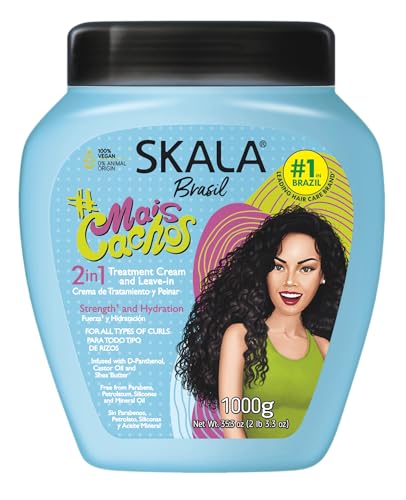
#8 Skala Expert MaisCachos 2-in-1 Treatment Cream and Conditioner
The viral Brazilian budget pick, sold in a one-kilo tub for less than most travel sizes. The formula is a textbook double-cationic system (cetrimonium chloride plus stearamidopropyl dimethylamine) with cetearyl alcohol, shea butter cetyl esters, glycerin, castor oil, argan oil, panthenol, and vitamin E. Vegan, silicone-free, and flexible enough to use as a rinse-out, a longer treatment, or a leave-in.
Why it suits low porosity hair: proof that conditioning chemistry is cheap: the same cationic agents that power salon formulas, in a light-to-medium cream that rinses clean. The price invites the one thing low porosity hair actually needs, which is generous, consistent conditioning and honest experimentation without guilt. A standout budget anchor for any low porosity hair products lineup.
Ingredients:
Aqua, Cetearyl Alcohol, Cetrimonium Chloride, Stearamidopropyl Dimethylamine, Shea Butter Cetyl Esters, Parfum, Glycerin, Ricinus Communis (Castor) Seed Oil, Benzyl Alcohol, Phenoxyethanol, Argania Spinosa Kernel Oil, Citric Acid, Tocopheryl Acetate, Panthenol, plus fragrance components. (Note: Skala sells several #MaisCachos variants; confirm the list on the tub you link, as the US Amazon listing and Brazilian site differ slightly.)
#9 NYC Curls The Curl Conditioner
A lightweight, silicone-free conditioner using cetearyl alcohol, behentrimonium chloride, and cetrimonium chloride with guar and polyquaternium-59 conditioning polymers, olive oil, aloe, and a botanical extract blend.
Why it suits low porosity hair: light, sprightly, and easy to rinse, with enough polymer slip to detangle fine low porosity curls without any heaviness; also works as a quick co-wash style refresher.
Ingredients:
Water (Aqua), Cetearyl Alcohol, Cetyl Esters, Butylene Glycol, Glycerin, Glycol Distearate, Fragrance (Parfum), Behentrimonium Chloride, Phenoxyethanol, Guar Hydroxypropyltrimonium Chloride, Ethylhexylglycerin, Glyceryl Stearate, Peg-100 Stearate, Benzyl Alcohol, Chlorphenesin, Potassium Sorbate, Sodium Benzoate, Cetrimonium Chloride, Disodium Edta, Olea Europaea Fruit Oil, Tocopheryl Acetate, Citric Acid, Aloe Barbadensis Leaf Juice Powder, Polyquaternium-59, Achillea Millefolium Extract, Cymbopogon Schoenanthus Extract, Humulus Lupulus Extract, Chamomilla Recutita Flower Extract, Rosmarinus Officinalis Leaf Extract, Melissa Officinalis Leaf Extract, Sodium Hydroxide, Citral, Limonene, Hexyl Cinnamal, Geraniol, Linalool, Eugenol.

#10 Jessicurl Too Shea! Extra Moisturizing Conditioner
A thick, BTMS-based cream with shea butter, jojoba oil, avocado oil, hydrolyzed oat flour, and a long herbal infusion; available fragrance-free, which is rare in this category.
Why it suits low porosity hair: rich slip for coarse or high-density low porosity hair and one of the best options if fragrance
Ingredients:
Aqua (Water), Cetearyl Alcohol, Butyrospermum Parkii (Shea Butter), Simmondsia Chinensis (Jojoba) Seed Oil, Persea Gratissima (Avocado) Oil, Behentrimonium Methosulfate, Aloe Barbadensis (Aloe Vera) Leaf Juice Powder, Lecithin, Hydrolyzed Oat Flour, Equisetum Arvense (Horsetail) Extract, Mentha Piperita (Peppermint) Leaf Extract, Rosmarinus Officinalis (Rosemary) Flower/Leaf/Stem Extract, Laurus Nobilis (Bay Laurel) Leaf Extract, Ocimum Basilicum (Basil) Leaf Extract, Urtica Dioica (Nettle) Leaf Extract, Arctium Lappa (Burdock) Root Extract, Althea Officinalis (Marshmallow) Root Extract, Origanum Vulgare (Oregano) Leaf Extract, Cymbopogon Flexuosus (Lemongrass) Extract, Thymus Vulgaris (Thyme) Leaf Extract, Salvia Officinalis (Sage) Leaf Extract, Cinnamal, Citral, Eugenol, Geraniol, Citronellol, Limonene, Linalool, Benzoic Acid, Dehydroacetic Acid, Phenoxyethanol.

#11 Oyin Handmade Honey Hemp Conditioner
A small-batch classic built on aloe, BTMS with cetearyl alcohol, honey, hemp and coconut oils, glycerin, and hydrolyzed silk.
Why it suits low porosity hair: a true middleweight: more cushion than a spray, lighter than a butter cream, with honey and silk giving a smooth, glossy finish. A dependable everyday pick across low porosity natural hair textures.
Ingredients:
Purified Water, Organic Aloe Vera Gel, Behentrimonium Methosulfate (and) Cetearyl Alcohol (Emulsifier Derived from Colza Oil), Honey, Virgin Hemp Oil, Coconut Oil, Vegetable Glycerine, Hydrolyzed Silk, Citrus Essences, Fragrance, Optiphen (Preservative).

#12 Odele Curl Defining Conditioner
A minimalist, affordable Target-shelf pick: glycerin second on the list, behentrimonium chloride and cetrimonium chloride for conditioning, hydrolyzed rice protein and amaranth seed extract for surface reinforcement, and a plant-derived emollient duo (capryloyl glycerin/sebacic acid copolymer with diheptyl succinate) standing in for heavier oils.
Why it suits low porosity hair: one of the lightest true conditioners on this list; it gives slip and softness with almost nothing left behind, which makes it ideal for fine, wavy, or easily weighed-down low porosity hair, and the rice protein is exactly the kind of small, surface-smoothing protein this hair handles well. Newer bottles list amodimethicone, so check the label if you track silicones between cleanses.
Ingredients:
Water, Glycerin, Cetearyl Alcohol, Stearyl Alcohol, Behentrimonium Chloride, Amaranthus Caudatus Seed Extract, Hydrolyzed Rice Protein, Capryloyl Glycerin/Sebacic Acid Copolymer, Diheptyl Succinate, Cetrimonium Chloride, Hydroxyethylcellulose, Isopropyl Alcohol, Linoleamidopropyl PG-Dimonium Chloride Phosphate Dimethicone, Tetrasodium Glutamate Diacetate, Benzyl Alcohol, Phenoxyethanol, Ethylhexylglycerin, Citric Acid, Fragrance. (Newer production adds Amodimethicone and Trideceth-12; confirm against the bottle.)

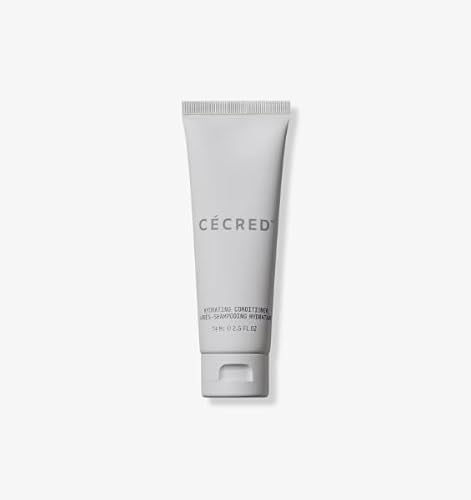
#13 Cécred Hydrating Conditioner
Beyoncé’s flagship conditioner, designed as a one-minute, high-slip rinse-out. Behentrimonium chloride and cetrimonium chloride drive the conditioning, the brand’s honey-and-keratin ferment plus a full amino acid lineup (arginine, glycine, proline, serine, and more) handle surface feel, and an African oil blend (castor, coconut, olive, moringa, baobab, black seed, babassu) and murumuru butter sit further down with PVP and a maltodextrin copolymer for light film and body.
Why it suits low porosity hair: concentrated but genuinely weightless in use; the amino acids are small, surface-active conditioners that suit low porosity hair perfectly, and the one-minute design fits hair that does not benefit from marathon conditioning sessions anyway. The PVP film former is worth knowing about if you cleanse infrequently. A splurge that earns its place on performance, not celebrity.
Ingredients:
Water/Eau/Aqua, Cetearyl Alcohol, Propanediol, Hydrogenated Ethylhexyl Olivate, Behentrimonium Chloride, Butyrospermum Parkii (Shea) Butter, Ricinus Communis (Castor) Seed Oil, Dipropylene Glycol, Cetrimonium Chloride, Cocos Nucifera (Coconut) Oil, Polyquaternium-10, Lactobacillus/Honey/Keratin Ferment, Olea Europaea (Olive) Fruit Oil, Moringa Oleifera Seed Oil, Adansonia Digitata Seed Oil, Nigella Sativa Seed Oil, Orbignya Speciosa Kernel Oil, Astrocaryum Murumuru Seed Butter, Panthenol, Arginine, Aspartic Acid, PCA, Alanine, Glycine, Histidine, Isoleucine, Phenylalanine, Proline, Serine, Threonine, Valine, Sodium PCA, Copernicia Cerifera (Carnauba) Wax, Stearalkonium Chloride, Hydrogenated Olive Oil Unsaponifiables, Hydrogenated Castor Oil, Guar Hydroxypropyltrimonium Chloride, Stearyl Alcohol, Tocopherol, PVP, Maltodextrin/VP Copolymer, Sodium Gluconate, Sodium Lactate, Caramel, Fragrance/Parfum, Citric Acid, Potassium Sorbate, Ethylhexylglycerin, Phenoxyethanol, Linalool.
#14 Giovanni 50:50 Balanced Hydrating-Calming Conditioner
A budget classic: cetyl, stearyl, and cetearyl alcohols with behentrimonium methosulfate and cetrimonium chloride, glycerin and panthenol, hydroxypropyl guar, and a long organic botanical blend with no heavy oils or butters in sight.
Why it suits low porosity hair: one of the lightest formulas in the lineup and a long-running low porosity favorite for exactly that reason; it conditions, detangles, and rinses away with essentially zero buildup risk.
Ingredients:
Aqua (Purified Water), Cetyl Alcohol, Stearyl Alcohol, Glycerin, Polysorbate 60, Phenoxyethanol, Cetearyl Alcohol, Hydroxypropyl Guar, Behentrimonium Methosulfate, Ethylhexylglycerin, Panthenol, Cetrimonium Chloride, Citric Acid, Natural Fragrance, *Aloe Barbadensis (Aloe Vera) Leaf Juice, *Helianthus Annuus (Sunflower) Seed Oil, *Glycine Soja (Soybean) Seed Extract, *Betula Alba (Birch) Extract, *Malva Sylvestris (Mallow) Extract, *Achillea Millefolium Extract, *Chamomilla Recutita (Matricaria) Flower Extract, *Equisetum Arvense Extract, *Lavandula Angustifolia (Lavender) Extract, *Rosmarinus Officinalis (Rosemary) Leaf Extract, *Salvia Sclarea (Clary) Extract, *Thymus Vulgaris (Thyme) Extract, *Tussilago Farfara (Coltsfoot) Flower Extract, *Urtica Dioica (Nettle) Extract.
*Organically produced product.

#15 amika Normcore Signature Conditioner
A salon-tier lightweight built on cetearyl alcohol and behentrimonium chloride with silicone quaternium-8 (a cationic silicone that targets the hair surface efficiently), shea butter, glycerin, a polyquaternium-37 film former, and omega-7-rich sea buckthorn oil as the signature ingredient.
Why it suits low porosity hair: “normcore” is the point: a no-gimmick, light-feeling conditioner that smooths and detangles without flattening fine low porosity hair. The cationic silicone deposits where it is needed and is easy to manage with regular cleansing; sea buckthorn is a pleasant emollient, not a miracle, and the formula does not need it to be. Color-safe.
Ingredients:
Water/Eau/Aqua, Cetearyl Alcohol, Behentrimonium Chloride, Fragrance/Parfum, Glycerin, Butyrospermum Parkii (Shea/Karite) Butter, Hippophae Rhamnoides (Sea Buckthorn) Fruit Extract, Silicone Quaternium-8, Trideceth-10, Capryloyl Glycerin/Sebacic Acid Copolymer, Diheptyl Succinate, Isopropyl Alcohol, Cocamide MIPA, Polyquaternium-37, Caprylyl Glycol, Propylene Glycol Dicaprylate/Dicaprate, Ethylhexylglycerin, Hexylene Glycol, PPG-1 Trideceth-6, Citric Acid, Sodium Hydroxide, Phenoxyethanol, plus fragrance components (Limonene, Hydroxycitronellal, Citronellol).

#16 Briogeo Be Gentle, Be Kind Aloe + Oat Milk Ultra Soothing Conditioner
A hypoallergenic, fragrance-free formula with behentrimonium chloride and behentrimonium methosulfate, glycerin high on the list, aloe, oat extract, and light plant oils (meadowfoam, grape seed, jojoba), plus arginine.
Why it suits low porosity hair: the pick for sensitive scalps: no fragrance, no essential oils, light conditioning that rinses completely. The arginine and oat give a soft, calm finish on fine or reactive low porosity hair.
Ingredients:
Water/Aqua/Eau, Glycerin*, Isopropyl Palmitate*, Behentrimonium Chloride*, Cetearyl Alcohol*, Brassica Alcohol*, Cetyl Esters*, Cetrimonium Chloride*, Aloe Barbadensis Leaf Juice*, Avena Sativa (Oat) Bran Extract*, Camellia Sinensis Leaf Extract*, Limnanthes Alba (Meadowfoam) Seed Oil*, Tocopheryl Acetate, Panthenol, Vitis Vinifera (Grape) Seed Oil*, Simmondsia Chinensis (Jojoba) Seed Oil*, Brassicyl Isoleucinate Esylate*, Behentrimonium Methosulfate*, Leuconostoc/Radish Root Ferment Filtrate*, Guar Hydroxypropyltrimonium Chloride*, Arginine*, Citric Acid*, Potassium Sorbate, Sodium Benzoate, Dehydroacetic Acid, Benzyl Alcohol*Coconut, vegetable, or plant derived.

#17 Innersense Pure Inspiration Daily Conditioner
A clean-premium daily conditioner with behentrimonium methosulfate and cetearyl alcohol leading, glycerin and aloe behind them, rice bran, avocado, and coconut oils mid-list, and hydrolyzed quinoa and rice proteins for surface smoothing.
Why it suits low porosity hair: formulated for fine to medium textures, which maps neatly onto the low porosity sweet spot: real slip, a touch of protein, and a finish that never feels coated. Silicone-free and a reliable daily driver.
Ingredients:
Water/Aqua/Eau, Behentrimonium Methosulfate, Cetearyl Alcohol, Glycerin, Stearalkonium Chloride, Aloe Barbadensis (Aloe Vera) Leaf Juice, Caprylic/Capric Triglyceride, Butyrospermum Parkii (Shea Butter), Sodium Benzoate, Oryza Sativa (Rice) Bran Oil, Persea Gratissima (Avocado) Oil, Cocos Nucifera (Coconut Oil), Hydrolyzed Quinoa, Hydrolyzed Rice Protein, Camellia Sinensis (Green Tea) Leaf Extract.
*Certified Organic.

How to Use a Conditioner on Low Porosity Hair
Technique matters more than people expect, because product sits on the surface at first and is easy to overdo. A few natural hair care tips that change results more than switching brands:
- Condition mid-length to ends. Your roots are the newest, healthiest, lowest porosity hair on your head and need the least help; your ends have lived the longest and need the most.
- Use less, distributed better. Emulsify a modest amount between your palms, smooth it through soaking-wet hair, and detangle with fingers or a wide-tooth comb so it actually reaches every strand.
- Give it a few minutes, not an hour. Cationic conditioning agents bind to the hair surface quickly; marathon sessions and heat caps mostly add ritual, not results, on a rinse-out product. [3]
- Rinse thoroughly. A surprising amount of “my hair feels coated” is just under-rinsing, especially with richer creams.
Change one thing at a time. Trial on your own hair is the only test that counts, so swap a single product and judge it over a few wash days before changing anything else.
Does Low Porosity Hair Need a Special Conditioner at All?
Honestly: it needs a well-formulated one, which most modern conditioners are, in a weight your hair can carry. Every conditioner on the market works through the same surface chemistry, whatever the front label says about porosity.
What earns a product a spot on this list is a sensible weight class, a clean rinse, and an ingredient list that lets you predict roughly how it will feel, so your trial and error is smarter, not blind. If your hair feels coated or limp no matter what you pick, the fix is usually less product and an occasional clarifying or deep-cleansing wash to reset, not another new conditioner. Buildup is a normal consequence of conditioning, it is not harming your hair, and it washes out.
Frequently Asked Questions
Can conditioner moisturize low porosity hair?
Not in the literal sense, and that is true for all hair: a strand’s water content is set mostly by the humidity around it, and products cannot change it much. [2] What conditioner does is deposit conditioning agents that smooth the cuticle and add slip and softness, which is what “moisturized” hair actually feels like. Low porosity hair takes those benefits beautifully; it just punishes excess weight faster than damaged hair does.
Should low porosity hair avoid protein in conditioners?
No. Hydrolyzed proteins are surface conditioning ingredients that smooth, temporarily reinforce, and wash away. [9] “Protein overload” is a community heuristic, not a measurable state, and several of the best performers on this list contain protein. Judge by how your hair feels after a few uses, not by the rumor.
Are silicones bad for low porosity hair?
No. Silicones smooth and detangle effectively; they do not “suffocate” hair or block anything that needed to get in. Like all conditioning ingredients they can build up with heavy use, and like all buildup, it cleanses out. If you wash infrequently, lean toward the silicone-free or volatile-silicone picks above and you will never think about it.
How often should low porosity hair be conditioned, and when should I clarify?
Condition every time you wash; there is no porosity reason to skip it. Clarifying is an as-needed reset for when hair starts to feel coated or stylers stop behaving, not a scheduled ritual. Many low porosity routines land somewhere between monthly and almost never, and that is fine.
What is the difference between this list and a deep conditioner?
Mostly time, richness, and marketing. Deep conditioners are richer creams meant to sit longer; the chemistry is the same surface conditioning. If your rinse-out leaves your hair soft and detangled, you are not missing a mandatory step by skipping masks.
Build the Rest of Your Low Porosity Routine
A conditioner is one slot in the lineup. The rest of the low porosity series, all aligned to the same science:
- Start with the foundation: the complete low porosity hair care guide
- Cleansing: shampoos for low porosity hair
- After the rinse: 17 best leave-in conditioners for low porosity hair
- Styling: curl creams for low porosity hair and gels for low porosity hair
- Oils, explained honestly: what to look for in oils for low porosity hair
- Richer treatments: deep conditioners for low porosity hair
- Protein, demystified: best proteins for low porosity hair and does low porosity hair need protein?
References
- Robbins CR. Chemical and Physical Behavior of Human Hair. 4th ed. New York, NY: Springer-Verlag; 2002.
- Barba C, Méndez S, Martí M, Parra JL, Coderch L. Water content of hair and nails. Thermochim Acta. 2009;494(1-2):136-140.
- Gavazzoni Dias MFR. Hair cosmetics: an overview. Int J Trichology. 2015;7(1):2-15.
- Bhushan B. Nanoscale characterization of human hair and hair conditioners. Prog Mater Sci. 2008;53(4):585-710.
- Coderch L, Alonso C, García MT, Pérez L, Martí M. Hair lipid structure: effect of surfactants. Cosmetics. 2023;10(4):107.
- D’Souza P, Rathi SK. Shampoo and conditioners: what a dermatologist should know? Indian J Dermatol. 2015;60(3):248-254.
- Rele AS, Mohile RB. Effect of mineral oil, sunflower oil, and coconut oil on prevention of hair damage. J Cosmet Sci. 2003;54(2):175-192.
- Keis K, Huemmer CL, Kamath YK. Effect of oil films on moisture vapor absorption on human hair. J Cosmet Sci. 2007;58(2):135-145.
- Cruz CF, Fernandes MM, Gomes AC, et al. Keratin-based peptide: effects on hair fiber. Int J Cosmet Sci. 2013;35(6):614-621.