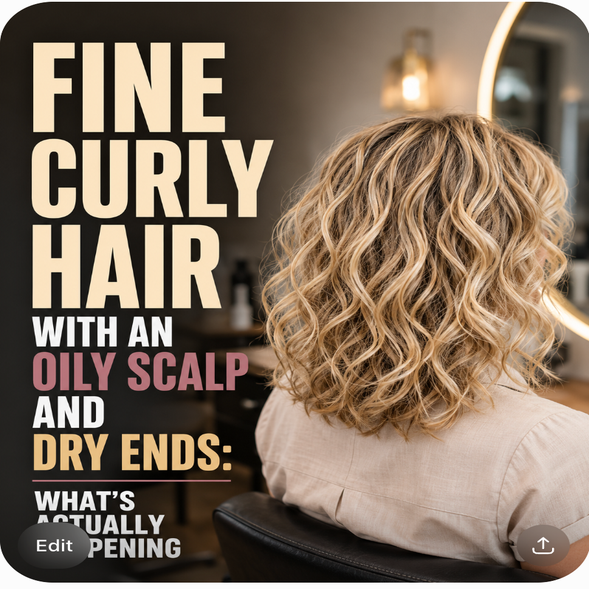
Going to bed with good curls is no guarantee they will still look good in the morning. For years I would style my curls, sleep on them, and wake up to a flattened, frizzy, stretched-out mess that sent me straight back to the sink. I assumed that was just the price of curly hair.
What actually changed things was realizing that overnight curl protection is not about a longer routine or more product. It is about three simple things: cutting friction, slowing water loss, and not crushing or over-handling the curl pattern while you sleep. Curls have more bends and weak points along the strand than straight hair, which makes them more prone to frizz, tangling, and breakage overnight. [1] The good news is that a few small changes do most of the work.
The short version: To sleep with curly hair without ruining it, swap cotton for a satin or silk surface (pillowcase, bonnet, or scarf), gather hair loosely on top of your head in a pineapple or a loose braid, go light on product, and avoid sleeping on soaking-wet hair. That is the whole formula; the rest is choosing the version that fits your hair.
In a hurry? Here is the gear worth having:
Why Do Curls Get Wrecked Overnight?
Three things: friction, water loss, and compression. As you toss and turn, your hair drags against the pillow. Cotton is the problem here: it roughs up the cuticle and wicks away the water your hair is holding, which leaves curls frizzy, dry, and tangled by morning. Curls are especially vulnerable because the bends in the strand are natural weak points, and because scalp oils travel down a coiled strand less easily, so the lengths and ends already run drier. [1] On top of that, the weight of your head compresses curls into dents and flat spots. None of this means curly hair is doomed overnight; it means the fixes are simple and physical: a smoother surface, less water pulled away, and the curls lifted off the pillow.
The Best Accessories to Preserve Curls Overnight
If you change one thing, change what your hair sleeps against. Smooth surfaces let curls glide instead of snag, and they do not absorb your hair’s water the way cotton does.
Satin vs. Silk Pillowcases: Which Should You Pick?
Both beat cotton, and the difference between them is smaller than the internet makes it sound. The honest answer: pick the one you will actually use every night.
| Satin | Silk | |
| Material | Usually a synthetic weave (polyester) | Natural fiber |
| Feel | Smooth, glossy | Softer, lightweight, sleeps cooler |
| Cost | More affordable, more colors | Pricier |
| Care | Easy to wash | Delicate; do not bleach it |
| Bottom line | Great everyday choice | A nicer feel if your hair runs dry or fragile |
Either one reduces friction and water loss. Consistency matters more than the material. One tip from experience: never bleach a silk pillowcase when you wash it; I ruined one that way.
Bonnet or Pillowcase? (You Can Use Both)
A bonnet protects more; a pillowcase is easier. A satin or silk bonnet, scarf, or wrap fully contains your hair, so it protects best if you move a lot, have longer or tighter-textured hair, or are preserving a braid-out, twist-out, or third- and fourth-day curls. A satin pillowcase is the lower-effort option and a good backup for when a bonnet slips off overnight. Plenty of people use both: bonnet first, satin pillowcase underneath. If you sleep hot or hate the feel of a bonnet, a satin-lined cap or a stretchy hair buff splits the difference by holding curls up without wrapping them tightly. Match the material, not just the style: a cotton scarf still creates friction.
Scrunchies, Spiral Ties, and Buffs
Standard elastics dent and pull. Satin scrunchies and spiral ties (like TELETIES) hold a loose pineapple or bun without creasing or stressing the hairline. A buff, a stretchy tube of fabric, is an underrated option that keeps curls lifted and volume intact, and many people find it more secure than a bonnet but less restrictive. Whatever you use, keep it loose; tension at the roots flattens curls and stresses the edges over time.
Do You Need Overnight Products?
Not always, and more is rarely better. Some people sleep on a satin surface and wake up fine. Others, especially with drier, finer, color-treated, or damaged hair, benefit from a little added softness before bed. The mistake is layering thick oils, butters, and heavy creams hoping they will hold until morning; that tends to leave curls limp, sticky, and harder to refresh, and repeated layering builds up over time. [2] Lighter usually wins overnight: a lightweight leave-in, a water-based refresh spray, a light serum, or a small amount of leave-in on the drier sections.
A simple trick that works for me: lightly mist with water mixed with a little leave-in, just damp, not wet, then put curls in a loose pineapple. By morning they are easier to separate and fluff without restyling from scratch.
An occasional overnight mask can help after bleaching, heat, or a dry spell, focused on mid-lengths and ends rather than the scalp. A few things are better left to short contact times, not overnight:
- Strong bond or “repair” treatments are designed for timed use; leaving them on all night does not make them work better and can leave hair feeling stiff.
- Clay masks can over-dry the lengths with prolonged wear.
The Best Overnight Hairstyles for Curly Hair
Once your hair is protected, the style you sleep in helps hold the pattern. The best one depends on your length, density, and whether your hair is fresh or a few days old.
The Pineapple
The most popular method for medium to long curls and looser patterns. Flip your hair forward, gather it loosely at the very top of your head, and secure with a satin scrunchie or spiral tie. Keep it loose; a tight ponytail stretches curls, flattens the roots, and stresses the hairline. Pair it with a bonnet or satin pillowcase for extra protection.
Loose Braids
Great for longer curls that tangle easily, and for anyone whose curls shrink or mat at the nape overnight. Braids reduce friction, contain the hair, and add a little stretch, loosening into a soft braid-out by morning. A loose braid beats a tight one, which can alter the pattern and stress the strands.
Bantu Knots
Best for tighter patterns and shorter hair, or anyone wanting elongated, defined curls. Divide the hair, twist each section until it coils into a knot, and secure gently. Because the hair stays compact and lifted, many people wake up with more definition and less flattening.
Flexi Rods
A heat-free way to create uniform definition overnight, especially for wavy and looser patterns or refresh days when definition has fallen apart. Smaller rods make tighter curls, larger rods make looser bends and volume. Let hair dry fully before removing them, taking them out early causes frizz.
Pin Curls
A heat-free option for looser curls, stretched styles, or blow-dried curly hair. Wrap small sections around your finger and pin them flat to the scalp. Held in a controlled shape overnight, curls come out smoother and more uniform by morning.
A Quick Word on Plopping
Plopping comes up a lot at night because wrapping wet curls in a cotton tee or microfiber towel supports curl clumping and cuts friction while hair dries. It is really a wet-styling and drying step rather than an overnight method, and sleeping in it soaking wet is not ideal (more on wet hair below). I keep the full how-to in a separate guide: how to plop curly hair.
Is It Bad to Sleep With Wet Curly Hair?
Occasionally is fine; as a habit, it is not ideal. Hair is more fragile when wet because water temporarily changes how the fiber behaves, so adds stress to already-vulnerable strands, especially hair that is already damaged or color-treated. [2] Sleeping soaking wet also tends to flatten the roots, stretch curl clumps, lengthen drying time, and leave some sections damp by morning.
If you wash at night, squeeze out the excess, let hair dry until it is at least mostly dry, use a microfiber towel or cotton tee rather than a rough towel, and keep it on a satin surface. For most people, partly drying before bed gives more consistent curls than going to sleep dripping.
How to Sleep With Curly Hair by Length and Pattern
No single method fits everyone. Use length and pattern as your guide:
- Short curls: a pineapple may not be possible, so reach for a satin bonnet or satin pillowcase, or try two or three mini-pineapples. Bonnets are especially handy here.
- Long or thick hair: a loose high pineapple or loose braids, plus a roomy (jumbo) bonnet so curls are not compressed; a satin scrunchie at the base keeps the hairline protected.
- Wavy hair: a loose pineapple, a satin pillowcase, and light overnight product, since waves flatten and weigh down easily.
- Curly hair: pineapple, buff, or bonnet, or a loose protective style that keeps curl clumps intact.
- Coily hair: braids, twists, or Bantu knots under a satin bonnet to reduce tangling and shrinkage and hold a stretched shape.
Common Overnight Mistakes
A few habits quietly undo your curls. Quick list:
- Tying it too tight. If your scalp is sore in the morning, the style was too tight.
- Too much product before bed. Heavy layering leaves curls limp and harder to refresh.
- Sleeping soaking wet. Flattened roots, longer drying, more frizz.
- Letting buildup accumulate. When curls suddenly stop lasting overnight, residue is often the culprit; clarify or check for buildup.
- Over-restyling every morning. Constant brushing and re-layering creates more frizz than sleep does. A gentle fluff usually beats a full redo.
In the Morning
If your curls held overnight, you may only need to fluff the roots with your fingers or a pick and go. If they need reviving, a light mist of water or a refresh spray, scrunched in gently, usually brings them back without rewashing. For the full method, see how to refresh curls in the morning, how to refresh curly hair without rewashing, and how to refresh curls between wash days.
Frequently Asked Questions
Is satin or silk better for curly hair?
Both reduce friction and water loss far better than cotton. Silk feels softer and sleeps cooler; satin is cheaper and comes in more options. The material difference is minor, so choose the one you will use every night.
Bonnet or pillowcase, which protects curls better?
A bonnet contains hair fully and protects more, especially for long, thick, or tightly curled hair. A satin pillowcase is easier and a good backup. Using both gives the most protection.
How do I sleep with curly hair without a bonnet?
Sleep on a satin or silk pillowcase and put your hair in a loose pineapple or loose braid secured with a satin scrunchie. That combination protects curls well without any head covering.
How do I sleep with short curly hair?
Use a satin bonnet or satin pillowcase, or make two to three mini-pineapples. Short hair that cannot gather into one pineapple still benefits most from a smooth surface.
How often should I wash my bonnet or pillowcase?
Regularly, at least weekly, and more often if you apply oils or treatments before bed. Product transfers onto the fabric and back into your hair, which can cause buildup over time.
Does protecting my hair at night really prevent breakage?
Reducing friction will not stop breakage on its own, but the habits around it help: avoiding tight ties, rough cotton, and sleeping on soaking-wet hair all reduce mechanical stress on the strand.
References
1. Cloete, E., Khumalo, N. P., & Ngoepe, M. N. (2019). The what, why and how of curly hair: a review. Proceedings of the Royal Society A, 475(2231), 20190516.
2. Robbins, C. R. (2012). Chemical and Physical Behavior of Human Hair (5th ed.). Springer.