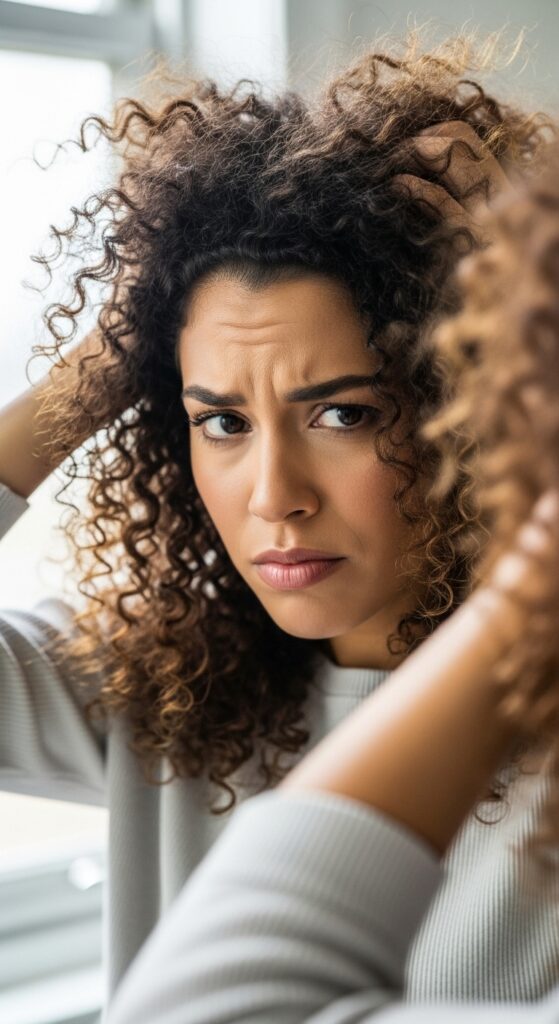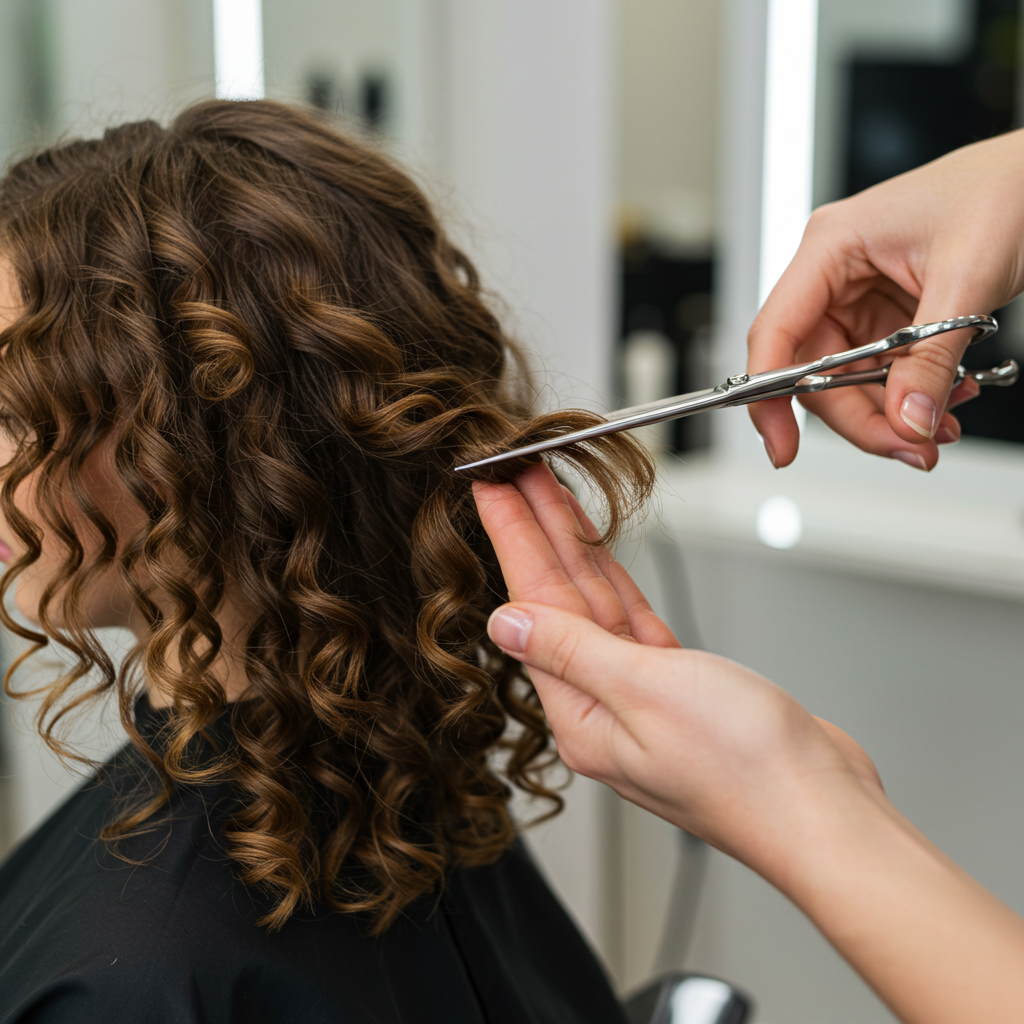
If you’ve just started embracing your curls, one of the first big questions is: What’s the right haircut for me? Unlike straight hair, curly textures demand their own approach. The right cut can make your curls spring to life, reduce frizz, and give your face an instant glow-up. The wrong cut? It can leave you battling bulk, flatness, or awkward grow-outs.
In this beginner’s guide, we’ll walk through the most popular curly haircuts, explain what they look like, and share curly haircut ideas that are easy to maintain and beginner-friendly. From curtain bangs on curly hair to shaggy curly haircuts and face-framing layers, you’ll discover styles that bring out the best in your natural curls.
Why the Right Curly Haircut Matters
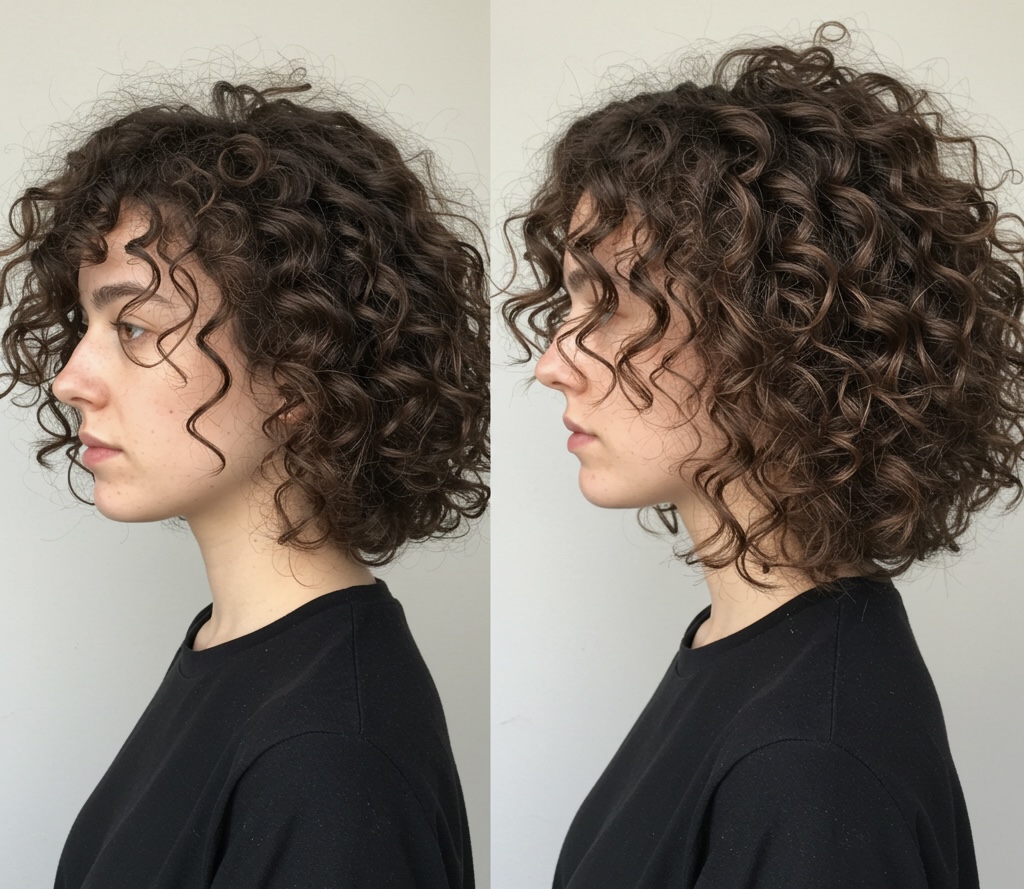
Curly hair isn’t just wavy or coily straight hair; it behaves completely differently. Shrinkage, curl pattern, and density all play huge roles in how a haircut looks once it dries. That’s why a trim designed for straight textures often falls flat on curls.
A curly-specific cut:
- Works with your curl pattern, not against it.
- Shapes your curls to prevent pyramid or “triangle” hair.
- Removes bulk while keeping volume in the right places.
- Helps you style faster and more confidently.
When it comes to cuts for curly hair, the goal is always to make your curls look effortless, whether you want a defined style, a carefree shag, or a low-maintenance short cut.
Beginner-Friendly Curly Haircut Styles & Ideas
Here are some of the best curly haircut ideas for first-timers. Each works for a different curl pattern, lifestyle, and personality.
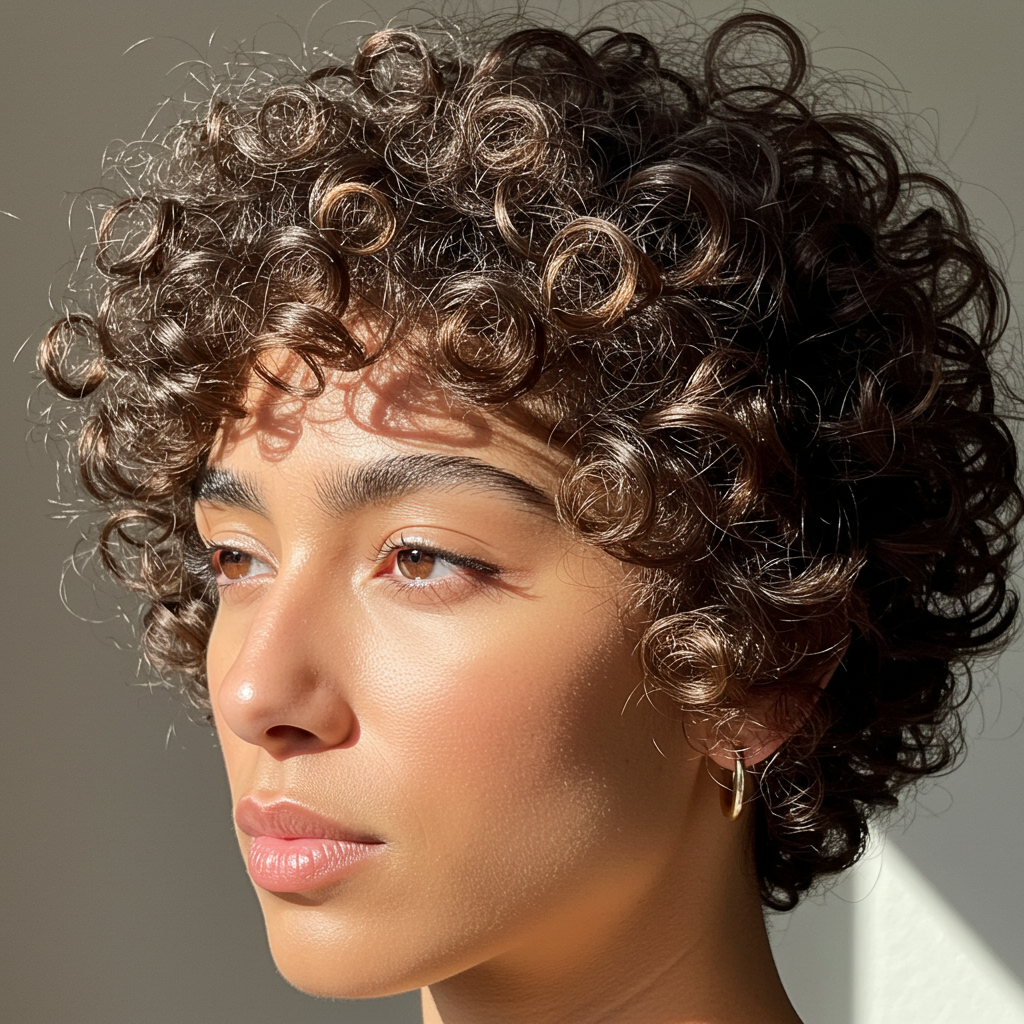
1. Curly Short Hair

- Best for: Those who want low-maintenance curls with minimal styling.
- Why it works: A short cut instantly lightens your hair, enhances volume, and makes wash days faster.
- Pro tip: Always account for shrinkage; what looks like chin-length when wet may dry into a bouncy cheekbone-length cut.
2. Medium Curly Hair
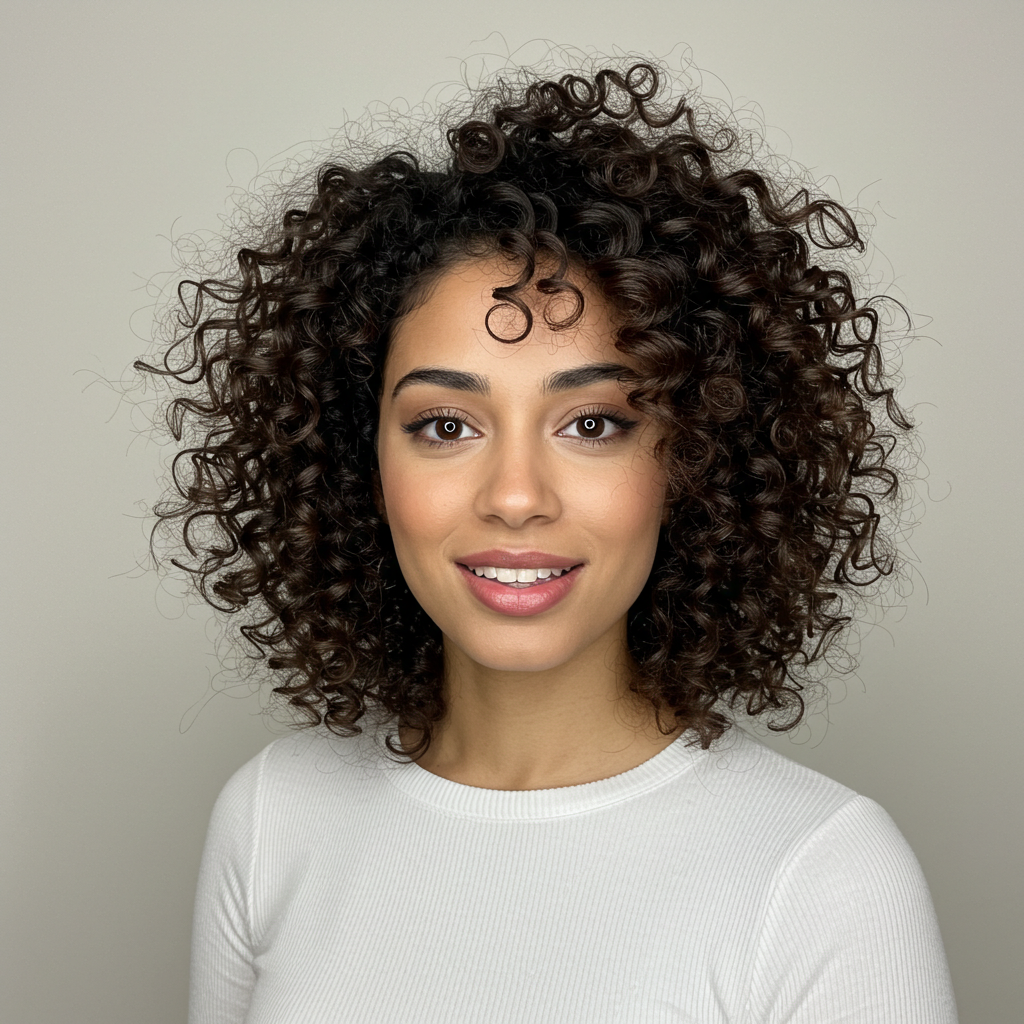
- Best for: Anyone who wants versatility without the high-maintenance of long curls.
- Why it works: Medium lengths give you enough hair for updos and styling, but won’t take hours to dry.
- Perm Curls for Long Hair are created by using a chemical treatment that restructures the hair’s bonds to form long-lasting curls or waves. Unlike natural curls, which vary in pattern and density, perm curls are set around rods and can be customized to look tighter or looser depending on the technique. For people with naturally straight or wavy hair, a perm can give the look of defined curls, but these curls often need similar haircut techniques (like layers or U-shapes) to prevent heaviness and keep them looking lively.
- Pro tip: Pair medium curly hair with subtle layers to keep shape as it grows.
3. Shaggy Curly Hair
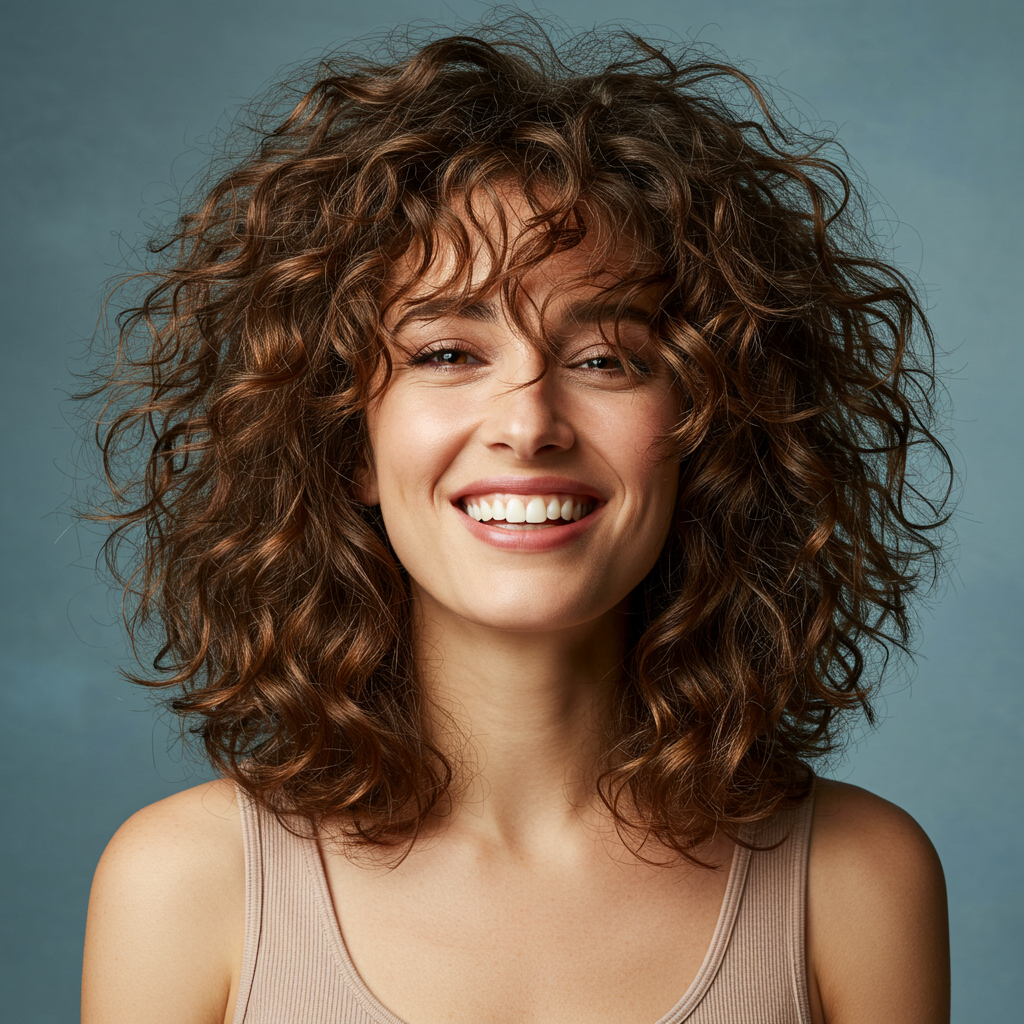
- Best for: Curlies who want movement, texture, and a bit of edge.
- Why it works: A shag uses layers and soft, feathery ends to add bounce without overwhelming bulk. It’s also forgiving as it grows out.
- Pro tip: Style with a lightweight curl cream or mousse to bring out the layers.
4. Curtain Bangs Curly Hair


- Best for: Anyone craving a fresh, face-framing look.
- Why it works: Curtain bangs create softness around the eyes and cheekbones. They’re versatile; you can style them forward, to the side, or let them blend into your curls.
- Pro tip: Ask your stylist to cut bangs curl by curl while dry to avoid a blunt, uneven look.
5. Face Framing Curly Hair
- Best for: Curlies who want a flattering cut without the commitment of bangs.
- Why it works: Gentle face-framing layers highlight your features and reduce heaviness at the front.
- A U-shaped curly haircut adds length at the back while keeping the sides slightly shorter, giving curls a soft cascading effect.
- A round haircut for curly hair creates volume evenly around the head. It’s especially flattering for tighter curl types or for those who want a balanced, halo-like shape.
- Pro tip: Ideal for beginners—it’s a small change that makes a big impact.
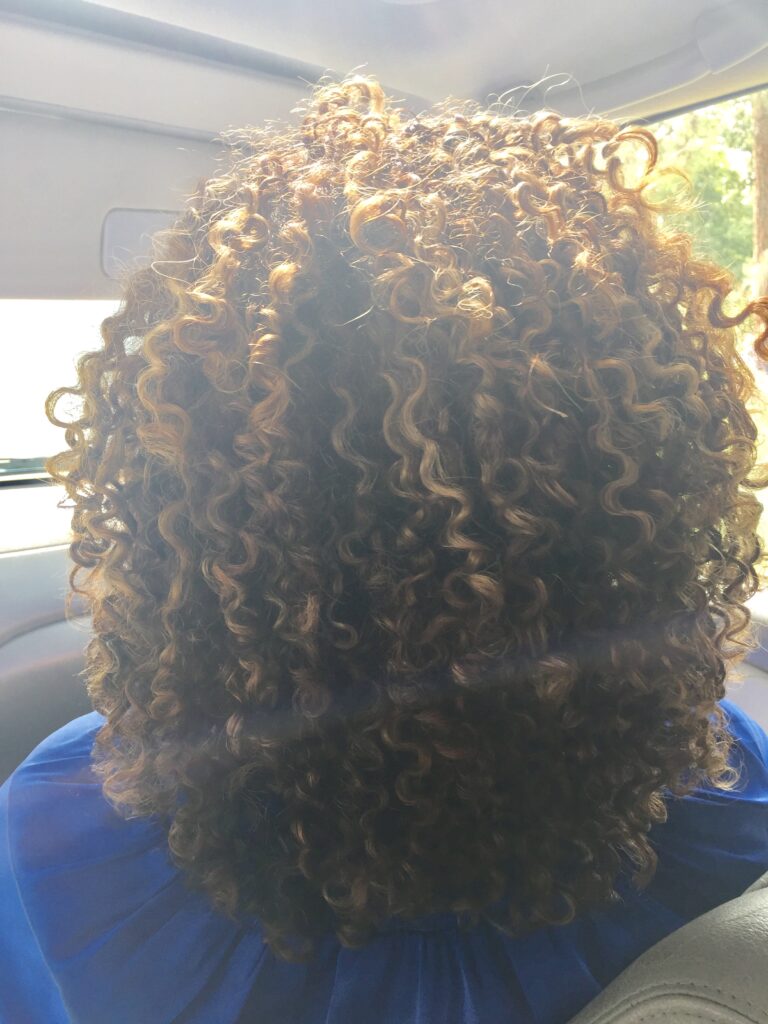
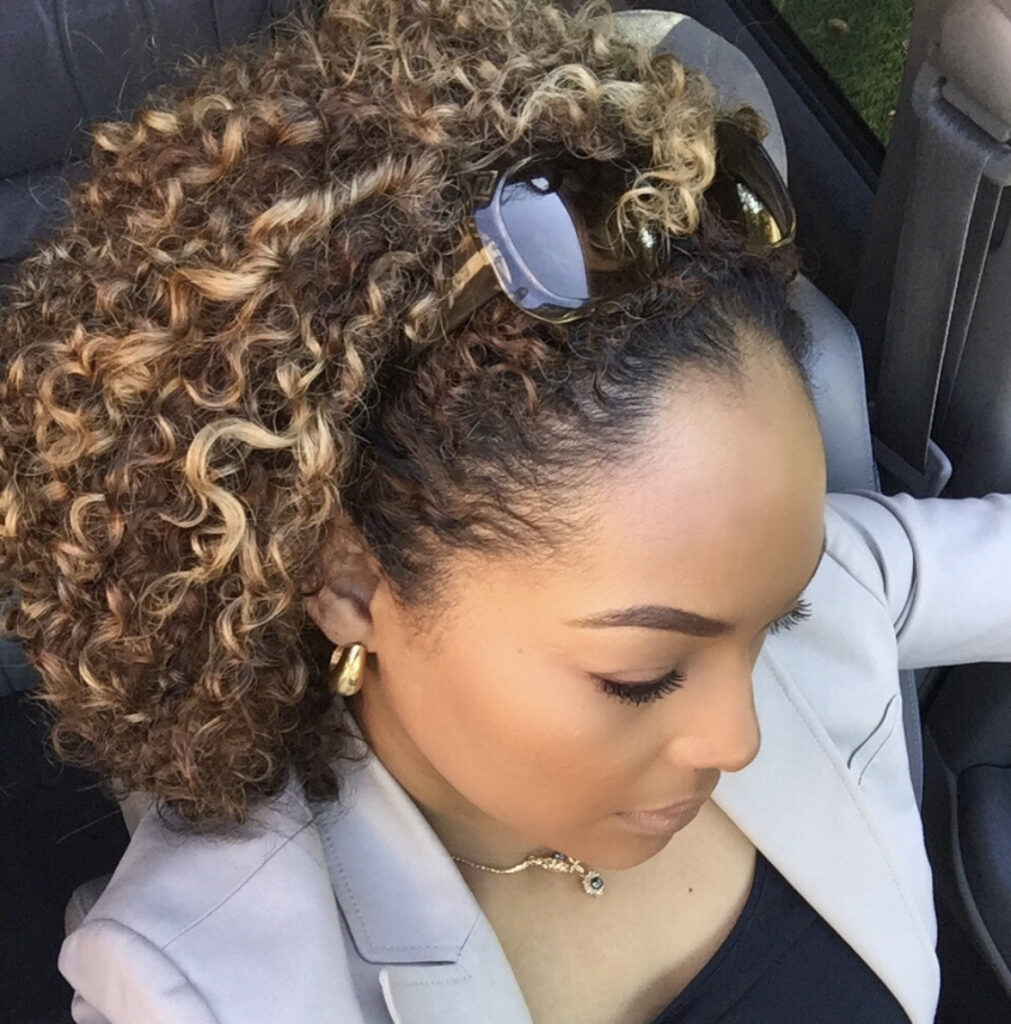
6. Curly Hair With Layers (Natural Curls)
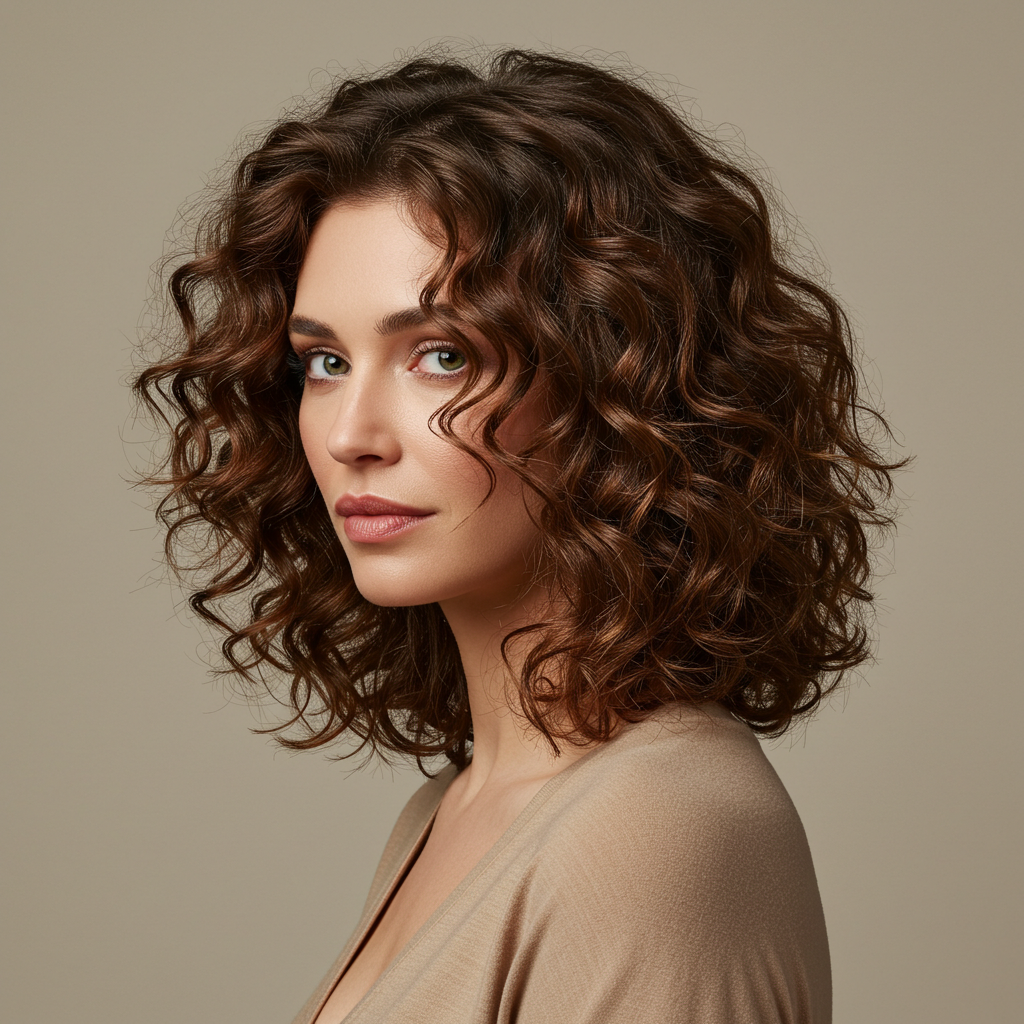
- Best for: Thick, dense curls that need shape. Curly hair with layers works for every curl type, but the length and depth of layers should be customized to your curl density and pattern.
- Why it works: Adding layers in curly hair with natural curls helps release bulk, define curl clumps, and create shape without sacrificing volume. Layers prevent the dreaded triangle look, help curls stack beautifully, and make styling easier across all curl types. For example, 3B curls especially benefit from layering since it removes excess weight, allows curls to spring up, and keeps the hair from looking bulky at the ends.
- Curly Hair with Lots of Layers: For curlies who love big volume, a haircut with lots of layers can create a rounded, airy shape with maximum bounce, but heads up – it requires more styling upkeep.
- Pro tip: Ask about the difference between long and short layers. Long layers preserve weight, short layers create extra volume.
7. Wavy Haircuts
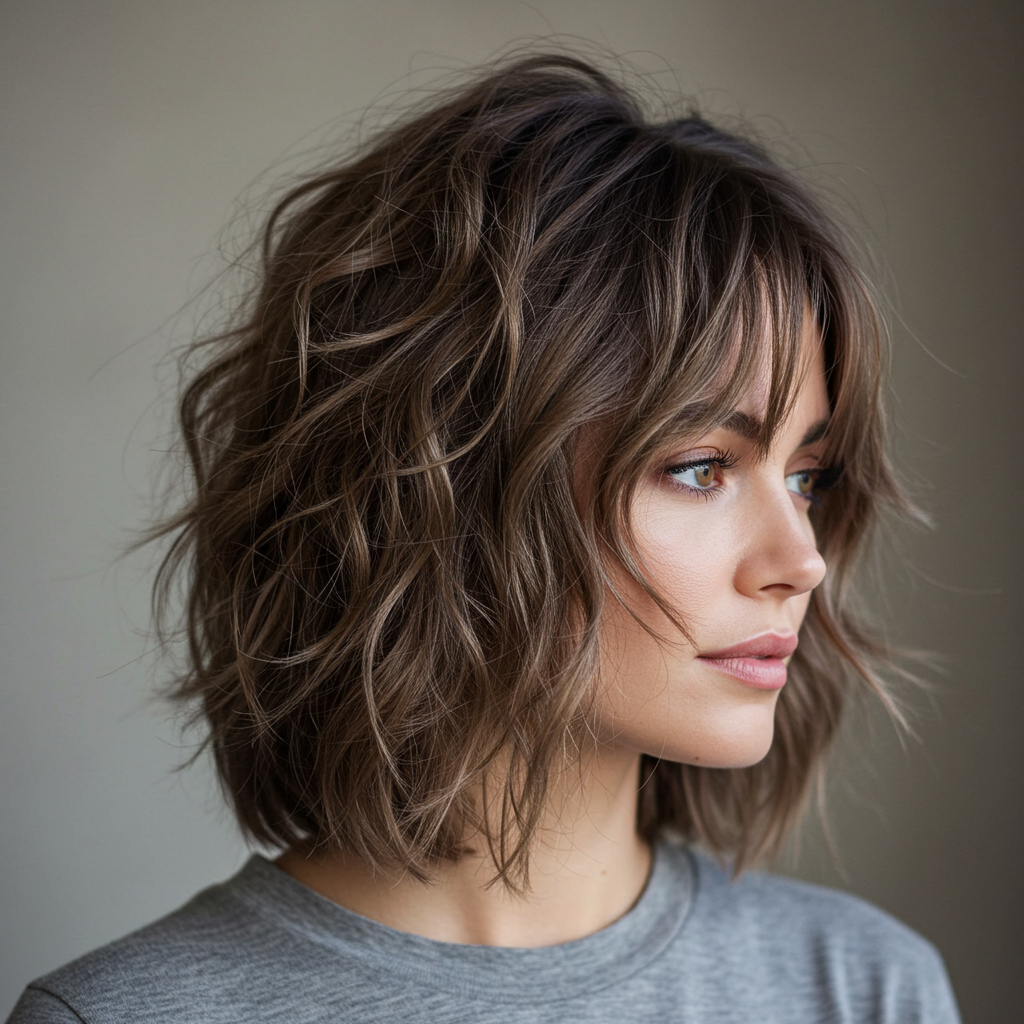
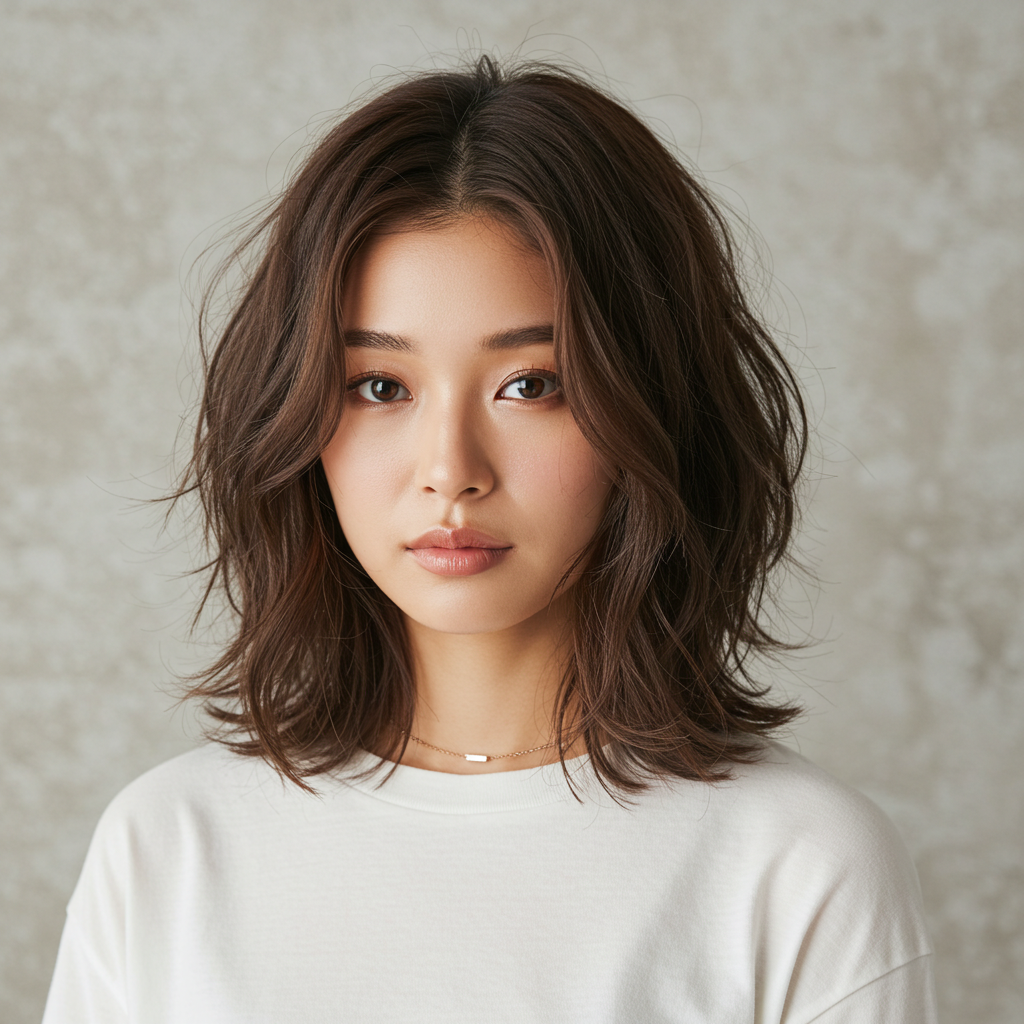
- Best for: Loose curls or waves transitioning from straight cuts.
- Why it works: Blunt cuts can weigh down wavy hair, but soft layering creates movement and definition.
- Pro tip: Try long layers or a textured cut to keep waves from looking flat.
8. Wavy Mullet

- Best for: Bold beginners who want a trend-driven look.
- Why it works: A wavy mullet is edgy, lightweight, and surprisingly versatile; it gives shape in the front and party in the back.
- Pro tip: Works best on looser waves or curls that can hold textured volume.
What to Ask Your Stylist (Beginner’s Checklist)
- Do you have experience with curly haircuts?
- Will you cut my hair wet or dry?
- How will layers affect my curl pattern?
- Can you show me how to style curtain bangs or a shag with curls?
- What’s the recommended trim schedule for this cut?
What NOT to Do: Mistakes Beginners Make
Even with the best intentions, a few rookie moves can sabotage your first curly haircut:
❌ Don’t straighten before your appointment. Your stylist needs to see your natural curl pattern to shape it correctly.
❌ Don’t ask for razor thinning. Razors can roughen the cuticle, causing frizz and split ends.
❌ Avoid blunt, one-length cuts. They tend to create a heavy, triangle shape in curly hair.
Rule of thumb: Always let your stylist cut curls as they live naturally.
Salon Prep Guide: How to Arrive for Your First Curly Haircut
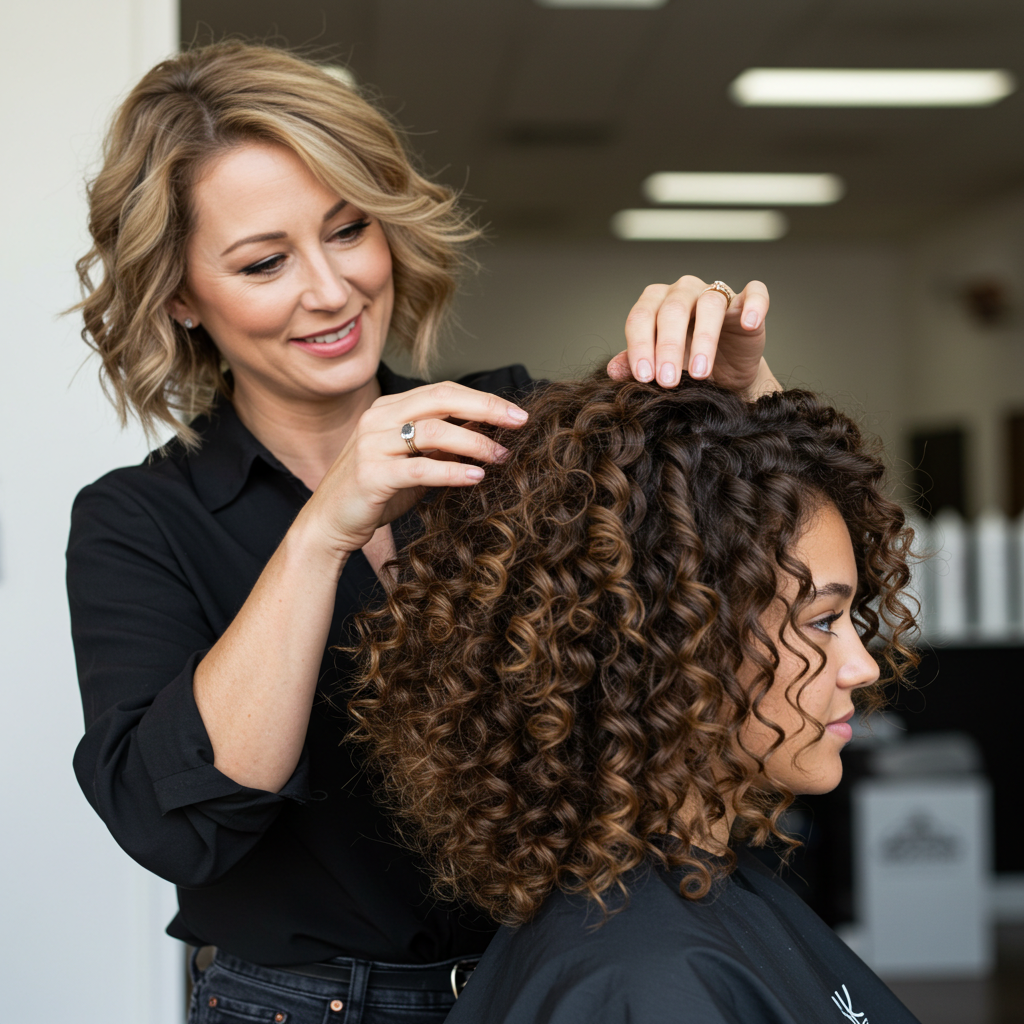
This feels like insider info, but it makes a huge difference:
✅ Wash and style your hair the way you normally wear it; clean, dry, and with your usual products.
✅ Don’t arrive with hair brushed out or in a bun; stylists need to see your real curl pattern.
✅ Skip heavy oils or deep treatments that could weigh your curls down.
Think of it as showing your stylist a “day in the life” of your curls.
Stylist Search Tips for Beginners
Finding the right stylist is half the battle:
- Search for curl-specialty training like DevaCut or RezoCut.
- Check Instagram or TikTok portfolios, look for clients with curls similar to yours.
- Read salon reviews. Mentions of “curly hair” or “natural curls” are green flags.
- Ask your curly friends (or curly Facebook groups) for local recommendations.
Budget & Expectations
Curly-specific cuts can be more expensive than a standard salon trim because they require more time and training. Depending on where you live:
- Expect to pay $80–$200 for your first curly haircut.
- Trims afterward may be cheaper but still higher than a “regular” cut.
- The investment pays off: a good curly cut grows out gracefully and reduces the need for constant styling.
Grow-Out Timeline: What If You Don’t Love It?
This is a common beginner fear! The good news:
- Layers and face-framing cuts grow out softly within 2–3 months.
- Curtain bangs for curly hair can blend back into your curls within 3–4 months.
- Shaggy curly haircuts grow out the most gracefully; they’re forgiving and easy to reshape later.
Even if you’re unsure, your hair won’t be “ruined.” Curls adapt beautifully as they grow.
Texture Diversity: What If I Have Coils?
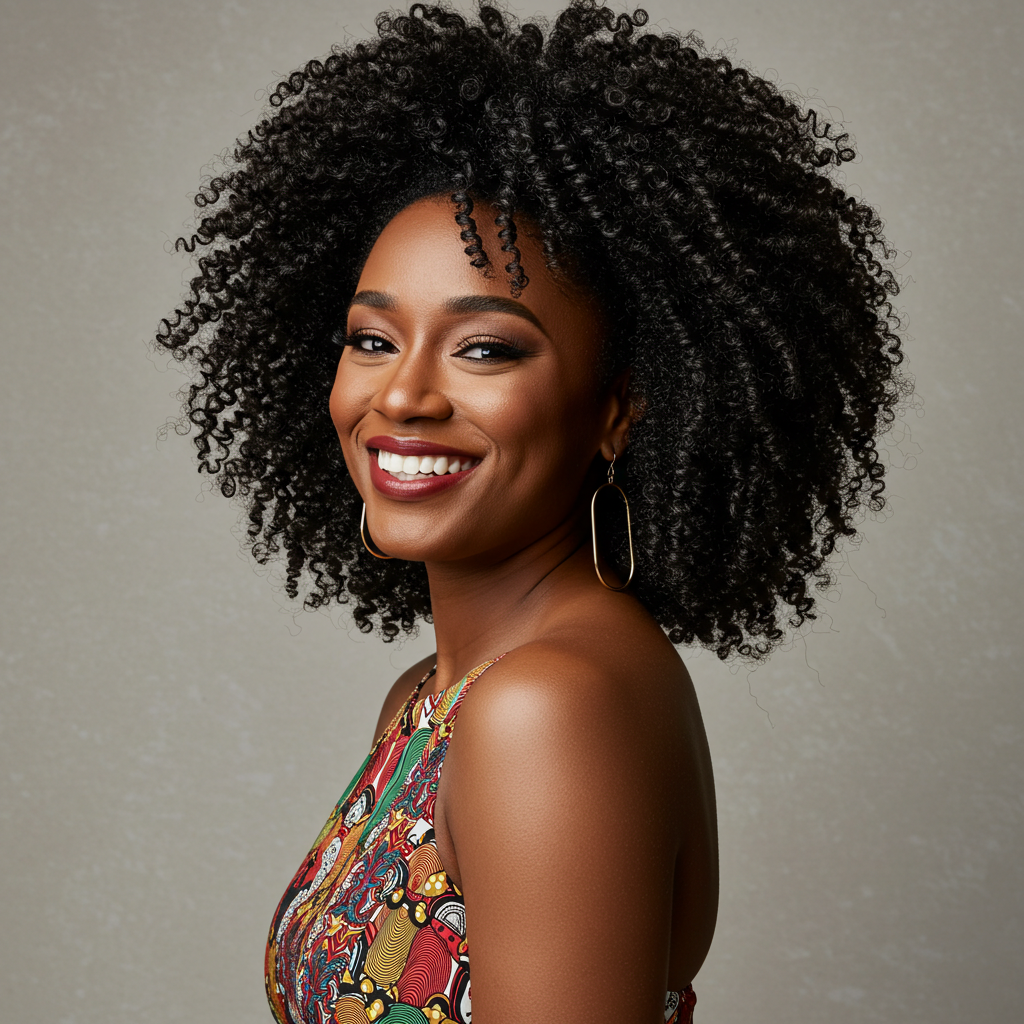
We’ve talked a lot about wavy and curly cuts, but what if your hair is coily (type 4)?
The truth: most of these cuts work for tighter textures too, with adjustments. For example:
- Layers in natural curls also help coils avoid bulk and enhance definition.
- Face framing works beautifully on coils when paired with shape-preserving trims.
- Short curly cuts are especially transformative for coils, making wash-and-go styles effortless.
👉 The key is finding a stylist experienced with your curl type, whether that’s waves, curls, or coils.
Salon Lingo You Might Hear (and What It Really Means)
When you sit in the chair for your first curly haircut, your stylist may use terms that sound confusing at first. Here’s a beginner’s glossary so you’re never left wondering:
Plopping – Wrapping wet curls in a cotton T-shirt or microfiber towel to reduce frizz and speed up drying.
Dry Cutting – Cutting curls while they’re dry so the stylist can see how each curl naturally springs and sits.
Dusting – A tiny trim where just the ends are snipped off to remove split ends without changing length.
Scrunch Out the Crunch (SOTC) – Breaking the stiff gel cast after your hair dries to reveal soft, bouncy curls.
Squish to Condish – A conditioning method where you squish water + conditioner into the curls to lock in hydration.
Diffusing – Using a blow dryer with a diffuser attachment to dry curls gently without frizz.
Diffuser – The bowl-shaped attachment with prongs that helps distribute airflow evenly.
Cast – The crunchy hold left behind by gel or mousse before it’s scrunched out.
Slip – How easily a product helps detangle hair (lots of slip = less tangling).
Pineappling – Gathering hair loosely on top of your head at night to preserve curls while you sleep.
Layers – Shorter pieces added for movement and volume.
Curtain bangs – Middle-parted bangs that frame the face.
Shag – A layered, textured cut with movement.
Face framing – Layers designed to highlight features.
Maintenance Tips for Your New Curly Haircut
Experiment: Try new products or techniques as your cut settles in.
Styling: Use lightweight creams or gels to define curls without weighing them down.
Trims:
- For short curly cuts or pixies → plan for trims every 6–8 weeks, since shorter shapes lose definition faster as they grow out.
- For medium to long curly hair → every 12–16 weeks is enough to maintain shape. If your hair grows quickly, you may need to schedule trims a little sooner to maintain the shape of your cut.
Frizz control: Protect with a satin pillowcase or bonnet at night.
Volume balance: Use diffusing or air drying, depending on your cut.
How to Choose the Right Curly Haircut
Picking the best cut for your curls isn’t just about the style; it’s about lifestyle, maintenance, and comfort.
- Consider your curl type: Tight coils shrink more, looser waves need more layering for movement.
- Think about your routine: Do you want a 5-minute wash-and-go, or are you okay with styling daily?
- Account for face shape: Curtain bangs highlight oval and round faces, face-framing layers elongate square or heart shapes.
- Plan for grow-out: Cuts like shags grow gracefully, while bangs require more upkeep.
FAQs About Beginner Curly Haircuts
Q: Can I get curtain bangs with curly hair if I have tight curls?
A: Yes! They just need to be cut curl-by-curl while dry to match your pattern.
Q: Is a shaggy curly haircut high maintenance?
A: Not necessarily, shags grow out gracefully, but you’ll need to style with light product to show off the layers.
Q: What’s the difference between wavy haircuts and curly haircuts?
A: Wavy haircuts use softer layering to avoid flatness, while curly cuts need more precise layering to avoid bulk.
Q: Can layers in curly hair’s natural curls cause frizz?
A: Not if done correctly. Proper layers actually reduce frizz by shaping curls.
Conclusion
Your first curly haircut doesn’t have to be overwhelming. Whether you’re drawn to curtain bangs curly hair, a shaggy curly cut, or layers in natural curls, the right choice will enhance your texture and make daily styling easier.
Remember: the best curly haircuts are ones that fit your lifestyle, and let your natural texture shine. Bring photos, ask questions, and trust the process; you’ll walk out of the salon with confidence (and curls that finally feel like you).
📌 Save this guide for your next salon visit and share it with a curly-haired friend who’s ready for a fresh start.