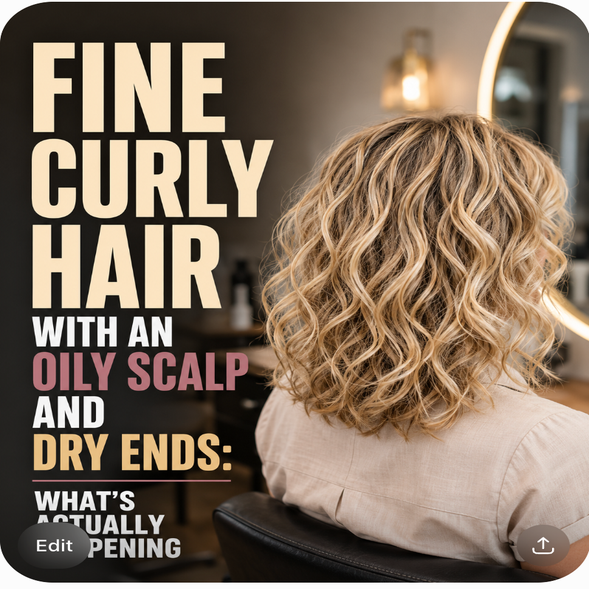
If you have damaged or high porosity hair, you have probably been told two things at once: that you need protein to strengthen it, and that too much protein will leave it stiff and snapping off. No wonder protein feels intimidating. I spent years anxious about getting the balance wrong. To cut through it, I went through the science with my friend, a hair scientist and cosmetic formulator with a PhD in chemistry.
Short answer: a protein treatment temporarily reinforces damaged, high porosity hair so it feels stronger and breaks less, by depositing protein fragments onto the worn parts of the strand. It is a real, useful tool. But it does not permanently repair or rebuild your hair, it does not reduce porosity for good, and protein overload and protein-moisture balance are not the scientific rules the community treats them as. You use protein to strengthen and protect, then condition; you do not have to balance macros.
Best Proteins for High Porosity Hair

What Do Protein Treatments Actually Do for High Porosity Hair?
High porosity hair is simply hair whose cuticle has been worn down, usually by bleach, color, heat, or daily wear, so water and product move in and out more easily and the strand is weaker and more breakage-prone. [1]
A protein treatment helps by depositing hydrolyzed proteins, protein broken into small fragments, onto the hair, where they are drawn to the damaged, negatively charged spots and temporarily fill in and reinforce them. [5] That makes the hair feel stronger and smoother and reduces breakage while it is on.
[6] What it does not do is permanently rebuild the strand. Conditioning and protein sit on and near the surface; they do not regrow the inner cortex, and the effect washes out over time. [7]
So a protein treatment is a genuinely useful tool for fragile, high porosity hair, best understood as temporary reinforcement you reapply, not a one-time repair that changes your hair forever.
The “Protein Overload” Myth (and Protein-Moisture Balance)
Here is the part that causes the most anxiety and has the least behind it. The curly world talks about protein-moisture balance and warns about protein overload, as if your hair holds a scale you have to keep level.
It does not work that way; these are community heuristics, not established hair science.
What is real is simpler: if you use a strong reconstructor too often, or one that does not suit your hair, without following it with enough conditioning, your hair can feel stiff, rough, or straw-like. That is not a mystical imbalance; it is a specific product and how you used it.
The fix is not to add moisture to rebalance, it is to use that treatment less often, follow protein with a good conditioner for slip, and judge by how your hair feels. You strengthen and protect; you do not manage a protein-to-moisture ratio.
What Is High Porosity Hair?

Porosity describes how easily water and product move into and out of a strand through the cuticle, the overlapping outer layer. All hair is permeable to water to some degree; what differs is how fast that exchange happens, which comes down to the condition of the cuticle. [3]
High porosity is not a fixed type you are locked into; it is mostly a sign of damage. A more worn cuticle lets water move in and out faster and leaves the strand weaker, which research links to lower tensile strength. [1,2]
One important correction: high porosity hair is not actually dry in the sense of lacking water. It takes up water readily, often more than healthy hair; the rough, dry feeling is the lifted, damaged cuticle, not a low water level. [7]
What Causes High Porosity?

High porosity is usually earned, not inherited. The common causes are bleach and chemical treatments, heat styling, sun, chlorine or salt water, and rough handling over time. [4]
The more the cuticle is worn down, the more permeable and fragile the hair becomes. The takeaway is less about labeling yourself high porosity and more about protecting the hair you have from further damage.
How Can You Tell If You Have High Porosity Hair?
The most reliable signal is your hair’s history: if you bleach, color, heat style, or put your hair through a lot of wear, it is almost certainly more porous than virgin hair.
Day to day, more porous hair tends to dry quickly, tangle and break more easily, feel rough when you run a finger up the strand, and react fast to weather.
The popular at-home tests, like floating a strand in a glass of water, are not reliable; a clean strand can sink or float depending on oils and how you drop it, so do not make decisions based on them. Go by what your hair has been through and how it behaves.
Best Types of Protein for High Porosity Hair
Most protein in hair products is hydrolyzed, meaning it is broken into smaller fragments so it can adsorb onto the hair and, in part, reach the damaged spots. [5] Smaller fragments and amino acids cling and penetrate more readily than large intact proteins.
Common ones you will see, all useful, include hydrolyzed keratin, wheat, soy, oat, quinoa, rice, silk, and collagen, plus amino acids. [6]
You do not need to chase one best protein; the overall formula and how your hair responds matter more. As a rule of thumb, the more damaged the hair, the more it tends to benefit from a stronger, protein-forward treatment used occasionally.
How to Use a Protein Treatment
A few practical guidelines:
- Match the strength to the damage: a gentle protein conditioner can be weekly, while a strong reconstructor (like a two-step treatment) is usually occasional, every few weeks, and mostly for bleached or chemically processed hair.
- Always follow protein with a good conditioner for slip and softness; protein on its own can feel firm.
- Apply to clean, damp hair, and patch test a new product first.
- If your hair feels stiff or straw-like afterward, that is your cue to use the treatment less often and condition more, not to rebalance moisture.
- Judge by feel over a few wash days; the right frequency is personal.
One distinction worth knowing: protein treatments reinforce the surface, while bond-builders like K18 and Olaplex aim to repair links deeper in the strand. Those are promising, but the independent evidence is still limited and debated, so treat them as another tool to try, not a guaranteed fix. [8]


This is my own high porosity hair: badly damaged from years of bleach and heat, then a few years into a consistent routine (about two years apart). The difference was not one miracle product or a single protein treatment. It came from cutting back on damage, conditioning regularly, using protein now and then for reinforcement, and handling my hair gently over time.
Protein helped it feel stronger and break less along the way, but the real change was protecting it day to day, not repairing it after the fact. With patience and consistency, your hair can look and feel a lot healthier too
11 Protein Treatments for High Porosity Hair
Here are eleven protein treatments worth knowing, running loosely from strongest to gentlest. I have described them by what they actually do rather than by ingredient fear, and silicones are not treated as a flaw. As always, a label cannot promise results, so use these as starting points to test on your own hair.
#1 Aphogee Two-Step Protein Treatment
The strongest option here: a hard-setting treatment with hydrolyzed collagen and vegetable protein that you rinse, then soften with its companion conditioner. It noticeably reduces breakage for a few weeks.
Best for: seriously bleached, color-treated, or breakage-prone hair, used every few weeks rather than weekly.
Ingredients: Water (Aqua, Eau), Hydrolyzed Collagen, Citric Acid, Magnesium Sulfate, Imidazolidinone, Panthenol, Tocopheryl Acetate, Mauritia Flexuosa Fruit Oil, Hydrolyzed Vegetable Protein Pg-Propyl Silanetriol, Phytantriol, Magnesium Carbonate, Cocamidopropyl Betaine, Dimethylol Urea, Trimethylsiloxyamodimethicone, C11-15 Pareth-7, C12-16 Pareth-9, Glycerin, Trideceth-12, DMDM Hydantoin, Fragrance (Parfum), Linalool.


#2 Giovanni Nutrafix Hair Reconstructor
Marketed as a reconstructor, but the formula is really a light cationic conditioner with botanical extracts and very little measurable protein. Treat it as a gentle conditioning step, not a true protein treatment, a good example of why the label cannot tell you what a product does.
Best for: mild, occasional conditioning rather than real strengthening.
Ingredients: Aqua (Purified Water), Cetyl Alcohol, Stearalkonium Chloride, Tocopherol (Vitamin E), Citric Acid, Phenoxyethanol, Natural Fragrance, *Helianthus Annuus (Sunflower) Seed Oil, *Glycine Soja (Soybean) Seed Extract, *Betula Alba Extract, *Malva Sylvestris (Mallow) Extract, *Achillea Millefolium Extract, *Chamomilla Recutita (Matricaria) Flower Extract, *Equisetum Arvense Extract, *Lavandula Angustifolia (Lavender) Extract, *Rosmarinus Officinalis (Rosemary) Leaf Extract, *Salvia Sclarea (Clary) Extract, *Thymus Vulgaris (Thyme) Extract, *Tussilago Farfara (Coltsfoot) Flower Extract, *Urtica Dioica (Nettle) Extract. *USDA Certified Organic.

#3 Curl Junkie Repair Me! Reconstructive Hair Treatment
A balanced reconstructor with hydrolyzed keratin, keratin amino acids, and cationic conditioners for slip, so it strengthens without feeling brittle.
Best for: monthly upkeep on damaged curls that still need softness.
Ingredients: Water/Aqua/Eau, Cetearyl Alcohol**, Behentrimonium Methosulfate, Hydrolyzed Keratin Protein, Helianthus Annuus (Sunflower) Seed Oil, Panthenol, Keratin Amino Acids, Hydrolyzed Yeast, Glyceryl Stearate, Simmondsia Chinensis (Jojoba) Seed Oil, Glycol Stearate, Prunus Armeniaca (Apricot) Kernel Oil, Cetyl Alcohol, PEG-100 Stearate, Tocopherol Acetate***, Citric Acid, Disodium EDTA, Fragrance/Parfum, Propylene Glycol, Diazolidinyl Urea, Iodopropynyl Butylcarbamate, *Benzyl Benzoate. *Fragrance Component **Derived from coconut oil. ***Sourced from Soy.

#4 Redken Extreme Anti-Snap Anti-Breakage
A leave-in treatment with wheat and soy proteins built to cut breakage between washes, with conditioning agents so it stays light.
Best for: fragile, snapping ends you want daily protection for.
Ingredients: Aqua/Water/Eau, Polyacrylamide, Phenoxyethanol, Amodimethicone, C13-14, Isoparaffin, Isopropyl Myristate, Parfum/ Fragrance, Laureth-7, Xylose, Hydrolyzed Soy Protein, Trideceth-6, Hydrolyzed Vegetable Protein PG-Propyl Silanetriol, Arginine, Citric Acid, Cetyl Alcohol, Cetrimonium Chloride, Behentrimonium Methosulfate, Benzyl Benzoate, Quaternium-33, Limonene, Benzyl Alcohol, Linalool, 2-Oleamido-1,3-Octadecanediol.

#5 Redken Extreme CAT Anti-Damage Protein Reconstructing Rinse Out Treatment
A quick rinse-out protein spray (hydrolyzed wheat protein) that adds strength without weight.
Best for: fine, damaged hair that gets weighed down easily.
Ingredients: Aqua/Water/Eau, Hydroxypropyltrimonium Hydrolyzed Wheat Protein, Magnesium Sulfate, Laureth-23, Taurine, Sodium Benzoate, Parfum/Fragrance, Cocamidopropyl Betaine, Salicylic Acid, Polyquaternium-10, Arginine, Lysine Hydrochloride/Lysine Hcl, Phenoxyethanol, Linalool, Hexyl Cinnamal, Citronellol (D50156/2).

#6 Aphogee Curlific! Texture Treatment
A quinoa-protein strengthening conditioner aimed at curls, with conditioning agents and a touch of silicone for softness and slip.
Best for: curly hair that wants gentle, fairly regular protein.A strong but fast rinse-out hydrolyzed-keratin reconstructor that detangles and smooths as it strengthens.
Best for: post-bleach recovery and routine strengthening between deeper treatments.
Ingredients: Water (Aqua, Eau), Stearyl Alcohol, Cetyl Alcohol, Behenamidopropyl Dimethylamine, Glycerin, Panthenol, Butyrospermum Parkii (Shea) Butter, Hydrolyzed Quinoa, Hydrolyzed Vegetable Protein PG-Propyl, Silanetriol, Mauritia Flexuosa Fruit Oil, Sodium PCA, Cucurbita, Pepo (Pumpkin) Seed Oil, Dimethicone, Amodimethicone, Lactic Acid, Polyester-11, PVP, Isostearamidopropyl Morpholine Lactate, Aminopropyl Dimethicone, Cetrimonium Chloride, Trideceth-10, Silicone Quaternium-22, Laureth-23, Laureth-4, Keratin Amino Acids, Trimethylsiloxyamodimethicone, C11-15 Pareth-7, C12-16 Pareth-9, Trideceth-12, Citric Acid, Disodium, EDTA, Methylchloroisothiazolinone, Methylisothiazolinone, Fragrance (Parfum), Linalool.

#7 Aphogee Keratin 2-Minute Reconstructor
A strong but fast rinse-out hydrolyzed-keratin reconstructor that detangles and smooths as it strengthens.
Best for: post-bleach recovery and routine strengthening between deeper treatments.
Ingredients: Water (Aqua, Eau), Glycerin, Cetyl Alcohol, Stearalkonium Chloride, Mineral Oil (Paraffinum Liquidum, Huile Minerale), Cetearyl Alcohol, Panthenol, Tocopheryl Acetate, Persea Gratissima (Avocado) Oil, l, Mauritia Flexuosa Fruit Oil, Triticum Vulgare (Wheat) Germ Oil, Hydrolyzed Keratin, Phytantriol, Petrolatum, Polysorbate 60, Amodimethicone, Stearyl Alcohol, Polyquaternium-10, Hydroxyethylcellulose, Trideceth-12, Cetrimonium Chloride, Collagen Amino Acids, Squalane, Hydrolyzed Glycosaminoglycans, Linoleic Acid, Linoleamidopropyl PG-Dimonium Chloride Phosphate, Trimethylsiloxyamodimethicone, C11-15 Pareth-7, C12-16 Pareth-9, Linolenic Acid, Citric Acid, DMDM Hydantoin, Disodium EDTA, Fragrance (Parfum), Benzyl Alcohol, Benzyl Benzoate.

#8 Palmers Coconut Oil Formula Deep Conditioning Protein Pack
A budget mask with keratin and silk protein plus coconut oil for conditioning, so it strengthens and softens in one step.
Best for: an affordable, occasional protein-and-conditioning boost.
Ingredients: Natural Vitamin E (Tocopherol), Water (Aqua), Cocos Nucifera (Coconut) Fruit Extract, Stearyl Alcohol, Cyclopentasiloxane, PEG-40 Stearate, Stearamidopropyl Dimethylamine, Cetyl Alcohol, Cyclohexasiloxane, Behenyl Alcohol, Cetearyl Alcohol, Cocos Nucifera (Coconut) Oil, Glycerin, Dimethicone, Butylene Glycol, Tocopherol, Helianthus Annuus (Sunflower) Seed Oil, Hydrolyzed Keratin, Gardenia Tahitensis Flower Extract, Nonfat Dry Milk (Sine Adipe Lac), Hydrolyzed Silk, Stearalkonium Chloride, Pentylene Glycol, Propylene Glycol, Decylene Glycol, 1,2-Hexanediol, Hydroxyethylcellulose, Sodium Acetate, Cellulose, Quaternium-26, Myristyl Alcohol, Hydroxyethyl Cetearamidopropyldimonium Chloride, Citric Acid, Disodium EDTA, Phenoxyethanol, Ethylhexylglycerin, Fragrance (Parfum), Benzyl Benzoate, Coumarin.

#9 Shea Moisture Manuka Honey & Yogurt Hydrate + Repair Protein
A protein-and-conditioning mask with cationic conditioners, butters, and oils alongside its protein.
Best for: damaged, over-processed hair wanting strength plus softness together.
Ingredients: Water, Cetearyl Alcohol, Behentrimonium Chloride, Caprylic/Capric Triglyceride, Ricinus Communis (Castor) Seed Oil, Butyrospermum Parkii (Shea) Butter*, Glycerin (Vegetable), Stearyl Alcohol, Glyceryl Stearate Citrate, Cocos Nucifera (Coconut) Oil, Fragrance, Honey, Butyrospermum Parkii (Shea) Oil, Yogurt Powder, Yogurt Extract, Adansonia Digitata (Baobab) Seed Oil, Glycine Soja (Soybean) Oil, Trichilia Emetica (Mafura) Seed Butter, Allantoin, Panthenol, Hydrogenated Castor Oil, Cera Alba (Beeswax), Copernicia Cerifera (Carnauba) Wax, Hydrolyzed Vegetable Protein PG-Propyl Silanetriol, Tocopherol, Sodium Hydroxide, Triethyl Citrate, Caprylyl Glycol, Inulin (Chicory Root), Benzoic Acid, Glyceryl Caprylate.

#10 Carol’s Daughter Almond Milk Daily Damage Repair Mask
A conditioning mask with sweet almond protein and keratin plus oils and cationic conditioners for slip.
Best for: weekly strength-and-softness upkeep on processed hair.
Ingredients: Water (Aqua), Cetearyl Alcohol, Behentrimonium Chloride, Cetyl Alcohol, Stearamidopropyl Dimethylamine, Amodimethicone, Cetyl Esters, Cocos Nucifera (Coconut) Oil, Glycerin, Hydrogenated Ethylhexyl Olivate, Propanediol, Isododecane, Butyrospermum Parkii (Shea) Butter, Prunus Amygdalus Dulcis (Sweet Almond) Oil, Jojoba Esters, Phenyl Trimethicone, Cetrimonium Chloride, C11-15 Pareth-7, Hydrolyzed Vegetable Protein PG-Propyl Silanetriol, Cystine Bis-PG-Propyl Silanetriol, Polysilicone-15, Laureth-9, Trideceth-12, Fragrance (Parfum), Polyglyceryl-4 Caprate, Prunus Amygdalus Dulcis (Sweet Almond) Fruit Extract, Moringa Oleifera Seed Extract, Aloe Barbadensis Leaf Extract, Helianthus Annuus (Sunflower) Extract, Rosmarinus Officinalis (Rosemary) Leaf Extract, Oryza Sativa (Rice) Bran Extract, Prunus Amygdalus Dulcis (Sweet Almond) Protein, Zea Mays (Corn) Starch, Laurdimonium Hydroxypropyl Hydrolyzed Keratin, Panthenol, Hydrogenated Olive Oil Unsaponifiables, Tocopherol, Guar Hydroxypropyltrimonium Chloride, Xanthan Gum, Polysorbate 60, Pentaerythrityl Tetra-Di-T-Butyl Hydroxyhydrocinnamate, Disodium EDTA, Citric Acid, BHT, Phenoxyethanol, Caprylyl Glycol, Chlorphenesin, Sorbic Acid, Benzoic Acid, Benzyl Alcohol, Linalool, Butylphenyl Methylpropional, Coumarin. Ingredients may vary.

#11 Curly Hair Solutions Pure Silk Protein Deep Moisturizing Treatment
A light silk-amino-acid conditioner offering gentle protein and good slip.
Best for: those who want a mild, frequent protein option. Note: contains DMDM hydantoin, a formaldehyde-releasing preservative a few sensitive scalps react to; not a reason to fear it, just worth knowing if you are sensitive.
Ingredients: DI Water, Isopropyl Myristate, Cetearyl Alcohol (and) Ceteareth-33, Cetrimonium Chloride, Silk Amino Acids, Jojoba Oil, Panthenol, Fragrance, DMDM Hydantoin, Lecithin, Citric Acid, Polyacrylamide.
Frequently Asked Questions
What do protein treatments do for high porosity hair?
A protein treatment deposits small protein fragments onto damaged, high porosity hair, where they cling to the worn spots and temporarily reinforce and smooth the strand. That makes hair feel stronger and reduces breakage while it is on. It is genuinely useful for fragile, processed hair, but the effect sits on and near the surface and washes out, so it is repeated reinforcement rather than a permanent repair. Follow it with conditioner for softness.
Is protein overload real?
Not as a scientific rule. Protein overload and protein-moisture balance are popular community ideas, not established hair science. Hair can feel stiff or straw-like after a strong protein product used too often or without enough conditioning, but that is the specific product and how you used it, not a mystical imbalance. The fix is to use strong treatments less often and follow with a good conditioner, then judge by how your hair feels.
How often should I do a protein treatment on high porosity hair?
It depends on the product and your hair, not a fixed schedule. A gentle protein conditioner can be weekly; a strong reconstructor is usually occasional, every few weeks, and mainly for bleached or chemically treated hair. The honest guide is feel: if your hair feels stiff afterward, space treatments out and condition more; if it still feels weak and breakage-prone, you have room for more. Change one thing at a time.
Does high porosity hair really need protein?
If it is damaged, often yes. More porous hair is weaker and breaks more easily, and protein temporarily reinforces those worn areas, which helps. But high porosity is not a personality type that demands protein forever; it is a sign of damage. The real goal is to protect your hair from further damage so it needs less rescuing over time. Use protein as one supportive tool, not a daily requirement.
Can a protein treatment permanently repair high porosity hair?
No. A protein treatment reinforces the surface and the damaged spots temporarily, so hair feels stronger and breaks less, but it does not regrow the inner cortex or undo damage for good, and the effect washes out. That is not a flaw; it is how these products work. Bond-builders like K18 aim deeper, but the independent evidence is still limited. The lasting fix is preventing further damage, not repairing it after the fact.
References
- Syed AN, Ayoub H. Correlating porosity and tensile strength of chemically modified hair. Cosmet Toiletries. 2002;117(11):57–64.
- Hessefort YZ, Holland BT, Cloud RW. True porosity measurement of hair: a new way to study hair damage mechanisms. J Cosmet Sci. 2008;59(4):303–315.
- Zviak C. The Science of Hair Care. Boca Raton, FL: Taylor & Francis; 2005.
- Shiel S. Hair health and management of common hair disorders. J Cosmet Dermatol. 2007;6:12–17.
- Neudahl GA. Proteins for conditioning hair and skin. In: Schueller R, Romanowski P, eds. Conditioning Agents for Hair and Skin. Taylor & Francis; 1999:139–166.
- Fernandes MM, Lima CF, Loureiro A, Gomes AC, Cavaco-Paulo A. Keratin-based peptide: biological evaluation and strengthening properties on relaxed hair. Int J Cosmet Sci. 2012;34(4):338–346.
- Robbins CR. Chemical and Physical Behavior of Human Hair. 4th ed. New York, NY: Springer; 2002.
- Martins G, et al. Evaluation of bond-building hair products. Cosmetics. 2024;11(5):150.