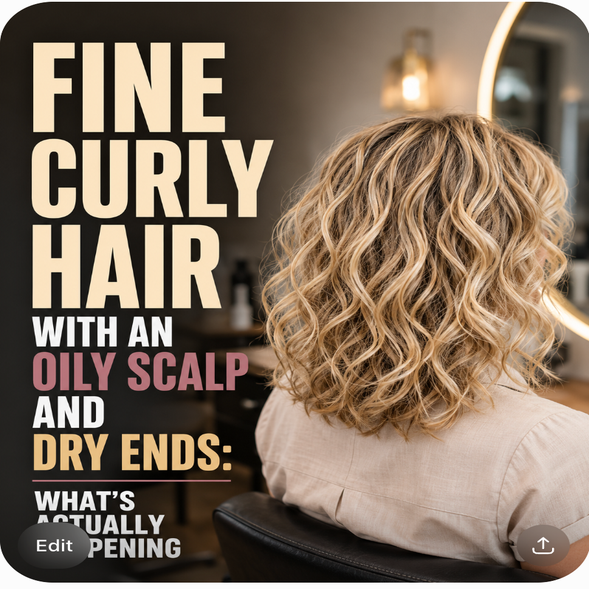
For years I shopped for deep conditioners the same way everyone online told me to: figure out whether my curls needed protein or moisture, then keep the two in balance. So when my hair felt rough, I reached for richer and richer moisture masks. It went limp and mushy. When it felt limp, I loaded up on protein. It went stiff. I kept chasing a balance that never seemed to hold.
When I finally asked my friend, a hair scientist and cosmetic formulator with a PhD in chemistry, why nothing was working, the answer reframed the whole thing. I had been playing a tug-of-war that does not actually exist. Protein overload and the protein-moisture balance are not real. Every deep conditioner is a conditioning treatment; protein is just one kind of conditioning ingredient. My hair was never out of balance. I was just using the wrong formula for what it was doing, and then overcorrecting.
Once I stopped balancing and started matching, my wash days got a lot less frustrating. This guide is built that way: by what your curls are actually doing, not by a seesaw you have to keep level.
A deep conditioner is a stronger conditioning treatment that smooths the cuticle, adds slip, and temporarily improves how damaged hair feels and holds together. It does not add moisture or rebuild your hair, and there is no protein-moisture balance to maintain; the best one is simply the formula that leaves your curls soft, defined, and manageable when you try it on your own hair.
What Does A Deep Conditioner Actually Do For Curly Hair?
A deep conditioner is conditioning, turned up. Like any conditioner, it works at the surface of the hair: cationic conditioning agents such as behentrimonium methosulfate, along with fatty alcohols, oils, butters, and silicones, cling to the cuticle, lay it flat, cut friction, and make curls easier to detangle, clump, and define.
A few ingredients do a little more. Coconut oil is small enough to penetrate the strand and has been shown to reduce protein loss during washing.[2] Hydrolyzed proteins form a thin temporary film that makes weakened, damaged spots feel more supported and hold together better.[1]
What none of it does is feed your hair or change its water content, which is set by the humidity around you, not by a mask. A deep conditioner is a reset that lasts until your next wash, and that is genuinely useful; it is just not the same as repair.
Protein Or Moisture? Why That Is The Wrong Question
I believed the balance story too, so I understand the appeal: protein on one side, moisture on the other, and trouble if you tip too far either way. But that seesaw was invented by the internet, not by hair science. There is no protein-moisture balance to keep level, and there is no such thing as protein overload. It helps to reframe the two symptoms people blame on imbalance:
Hair that feels stiff, hard, or brittle after a protein product is not suffering from too much protein. It is under-conditioned. The fix is more conditioning, a richer, more emollient treatment, not a counterweight of moisture. I unpack the protein fear in more detail here.
Hair that feels limp, mushy, or refuses to hold definition is usually weighed down by heavy product or buildup, which washes out, not “over-moisturized.” The answer is a lighter formula, or a proper cleanse, not more protein to balance it. If it keeps happening, the cause is often buildup or hard water, or repeated swelling from over-washing.
So the better question is not “protein or moisture?” It is “what is my hair doing, and which conditioning approach makes it behave better?” Match the formula to the behavior, then change one thing at a time over a few wash days and watch. Your own hair is the only reliable test.
Match The Feeling To The Fix
A quick way to translate what your curls feel into what to reach for, without the balance chart:
| If your curls feel… | What’s usually going on | What to reach for |
| Stiff, hard, or brittle after a protein product | Under-conditioned, not “too much protein” | A richer, emollient deep conditioner (butters, oils, cationic agents) to add the conditioning it’s missing |
| Limp, mushy, or won’t hold definition | Weighed down by heavy product or buildup, which washes out | A lighter formula; clarify or chelate if it’s buildup. Not more protein to “balance” it |
| Rough, dull, dry-feeling, tangly | The cuticle is roughed up and needs smoothing | A conditioning treatment with good slip (cationic agents, fatty alcohols, oils); silicones are fine here |
| Weak, over-stretchy, snapping (bleached or heat-styled) | Real structural damage | A film-forming protein treatment to support weak spots, then keep it well conditioned |
One note before the picks: brands reformulate, so the ingredient list on the bottle in your hand is the only one that counts; read it, and pick by the role the ingredients play rather than the claim on the front.

Best Deep Conditioners For Color-Treated and Bleached Curls
Bleach and permanent color lift the cuticle and weaken parts of the protein structure inside the strand, which leaves curls rougher, more fragile, and quicker to tangle and snap. These curls do well with rich conditioning plus a film-forming protein to support the weak spots.
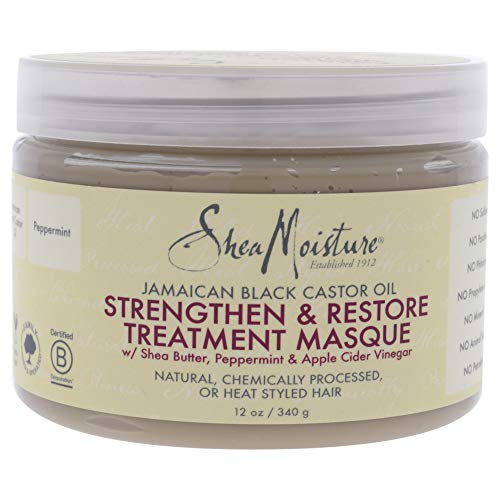
Shea Moisture Jamaican Black Castor Oil Strengthen & Restore Masque
A rich treatment that pairs cationic conditioners (behentrimonium methosulfate and chloride) and fatty alcohols with castor, avocado, and shea for slip, plus hydrolyzed wheat and keratin that film over damaged areas so they feel less brittle. The richness is the point for fragile, color-treated curls, though fine hair may find it heavy with frequent use.
Best for: Dry, damaged, color-treated curls that feel rough and snap easily. Heavier for fine or wavy hair.
Ingredients: Water (Eau), Cetearyl Alcohol, Cocos Nucifera (Coconut) Oil, Glycerin (Vegetable/VŽgŽtale), Butyrospermum Parkii (Shea) Butter* Water (Eau), Cetearyl Alcohol, Cocos Nucifera (Coconut) Oil, Glycerin (Vegetable/VŽgŽtale), Butyrospermum Parkii (Shea) Butter*, Stearyl Alcohol, Cetyl Alcohol, Behentrimonium Methosulfate, Fragrance (Parfum), Behentrimonium Chloride, Panthenol, Hydrolyzed Wheat Protein, Hydrolyzed Wheat Starch, Cetrimonium Chloride, Persea Gratissima (Avocado) Oil, Mangifera Indica (Mango) Seed Butter, Olea Europaea (Olive) Fruit Oil, Ricinus Communis (Castor) Seed Oil, Mentha Piperita (Peppermint) Leaf Extract, Mauritia Flexuosa (Buriti) Fruit Oil, Yeast Extract, Hydrolyzed Keratin, Macadamia Ternifolia Seed Oil, Tocopherol, Niacin, Aloe Barbadensis Leaf Juice, Acetic Acid (Apple Cider), Hydrogenated Vegetable Oil, Glycine Soja (Soybean) Oil, Trifolium Pratense (Clover) Flower Extract, Caramel, Propanediol, Caprylhydroxamic Acid, Caprylyl Glycol, Benzoic Acid.

Davines NOUNOU Conditioner
One I own and like for chemically processed hair. It leans on cationic conditioners plus dimethicone and amodimethicone, silicones that smooth roughed-up cuticles and shield damaged hair from friction and humidity.[3] For compromised hair, that is exactly what helps; the silicones are doing protective work, not harm.
Best for: Bleached, chemically processed, rough or tangly hair.
Ingredients: Water, Cetearyl Alcohol, Glycerin, Behentrimonium Chloride, Cetyl Alcohol, Cetrimonium Chloride, Dimethicone, Behenyl Alcohol, Benzotriazolyl Dodecyl P-Cresol, Fragrance, Benzyl Alcohol, Creatine, Amodimethicone, Simmondsia Chinensis (Jojoba) Seed Oil, Dicaprylyl Ether, Lauryl Alcohol, Disodium EDTA, Octadecyl Di-T-Butyl-4-Hydroxyhydrocinnamate, Sodium Benzoate, Prunus Amygdalus (Sweet Almond) Oil, Citric Acid, Hydrogenated Vegetable Oil, Tocopherol, Solanum Lycopersicum (Tomato) Fruit Extract, Linalool, Butyrospermum Parkii (Shea) Butter, Geraniol, Limonene, Caramel, Ci 19140/Yellow 5, Ci 14700 / Red 4, Ci 61570 / Green 5.

Briogeo Don’t Despair, Repair! Deep Conditioning Mask
A well-rounded option for damaged curls that still dislike very heavy products. Rosehip, avocado, and argan oils with cationic conditioners give softness and slip, while hydrolyzed corn, wheat, and soy proteins lend light support to weakened areas without coating the hair too thickly.
Best for: Dry, color-treated curls with moderate damage that want support without heaviness.
Ingredients: Water/Aqua/Eau, Brassica Alcohol, Cetyl Alcohol, Propanediol, Stearyl Alcohol, Persea Gratissima (Avocado) Oil, Prunus Amygdalus Dulcis (Sweet Almond) Oil, Rosa Canina Fruit Oil*, Argania Spinosa Kernel Oil*, Aloe Barbadensis Leaf Juice*, Panthenol, Leuconostoc/Radish Root Ferment Filtrate*, Biotin, Hydrolyzed Corn Protein, Hydrolyzed Wheat Protein, Hydrolyzed Soy Protein*, Panax Ginseng Root Extract, Calendula Officinalis Flower Extract, Laurus Nobilis Leaf Extract*, Palmaria Palmata Extract, Guar Hydroxypropyltrimonium Chloride*, Cetyl Esters, Isododecane, Cetrimonium Chloride*, Cetearyl Alcohol, Behentrimonium Methosulfate, Brassicyl Isoleucinate Esylate*, Citric Acid, Isopropyl Myristate*, Butylene Glycol, Glycerin, Fragrance (Parfum), Dehydroacetic Acid, Benzyl Alcohol.

Best Deep Conditioners for Heat-Damaged Curls
Repeated high heat weakens the proteins inside the strand and disrupts curl formation, and the truly heat-damaged sections usually cannot be brought back; over time, trimming is part of the answer.[4] What a deep conditioner can do is make the damaged stretch softer, smoother, and less prone to snapping while you grow it out. A film-forming protein treatment tends to help most here.
Aveda Damage Remedy Intensive Restructuring Masque
Built around quinoa protein, which films over weak spots, with silicones and squalane for slip on rough hair and castor, jojoba, and meadowfoam oils for softness. A strong smoothing-and-support combination for damaged texture.
Best for: Heat-damaged, rough, or weakened curls that need both slip and structural support.
Ingredients: WaterAquaEau, Cetearyl Alcohol, Dimethicone, Stearalkonium Chloride, Behentrimonium Chloride, Phenyl Trimethicone, Glycerin, Stearyl Alcohol, Ricinus Communis (Castor) Seed Oil, Chenopodium Quinoa Seed Extract, Simmondsia Chinensis (Jojoba) Seed Oil, Limnanthes Alba (Meadowfoam) Seed Oil, Hippophae Rhamnoides Oil, Fusanus Spicatus Wood Oil, Hordeum Distichon (Barley) ExtractExtrait D’Orge A Deux Rangs, Phellodendron Amurense Bark Extract, Helianthus Annuus (Sunflower) Seed Oil, Lactic Acid, Squalane, Tocopherol, Glycine Soja (Soybean) Oil, Coco-Caprylate/Caprate, Dimethiconol, Behenamidopropyl Ethyldimonium Ethosulfate, Dimethiconol Meadowfoamate, Hydroxyethylcellulose, Polyquaternium-10, Sodium Gluconate, Alcohol Denat., Fragrance (Parfum), Limonene, Linalool, Citronellol, Potassium Sorbate, Phenoxyethanol.

Hydratherma Naturals Amino Plus Protein Deep Conditioning Treatment
The most protein-forward pick here, with silk, rice, corn, and soy proteins plus free amino acids and humectants. It films and supports curls that feel weak, fragile, or over-stretchy. If your hair feels stiff afterward, that is a sign it wants more conditioning next, not that you used “too much” protein, so follow with a richer, emollient treatment.
Best for: Weak, fragile, over-stretchy heat-damaged curls. Follow with an emollient conditioner if it feels stiff.
Ingredients: Water/Aqua, Cetyl Alcohol, Dicetyldimonium Chloride, Stearyl Alcohol, Dimethicone, Tocopheryl Acetate, Glycerin, Hydroxyethylcellulose, Hydrolyzed Soy Protein, Panthenol, Cetrimonium Chloride, Aloe Barbadensis Leaf Juice, Spirulina Maxima Extract, Silk Amino Acids, Hydrolyzed Rice Protein, Hydrolyzed Corn Protein, Retinyl Palmitate, Ascorbyl Palmitate, Phytonadione, Pyridoxine HCL, Biotin, Sodium PCA, Betaine, Sorbitol, Glycine, Alanine, Proline, Serine, Threonine, Arginine, Lysine, Glutamic Acid, Rosa Canina Fruit Extract, Panax Ginseng Extract, Centella Asiatica Extract, Fragrance/Parfum, Methyl Gluceth-10, PEG-45M, Triethanolamine, Citric Acid, Methylchloroisothiazolinone, Methylisothiazolinone. PARABEN FREE.

Shea Moisture Manuka Honey and Yogurt Hydrate Plus Repair Protein Power
A gentler middle ground that pairs yogurt-derived and hydrolyzed vegetable protein for light support with honey, shea, baobab, and mafura for slip and softness. Easier to tolerate than a heavy-duty protein treatment.
Best for: Moderate heat damage; dry curls that feel weak and rough. Can feel heavy on fine hair.
Ingredients: Water, Cetearyl Alcohol, Behentrimonium Chloride, Caprylic/Capric Triglyceride, Ricinus Communis (Castor) Seed Oil, Butyrospermum Parkii (Shea) Butter* Water, Cetearyl Alcohol, Behentrimonium Chloride, Caprylic/Capric Triglyceride, Ricinus Communis (Castor) Seed Oil, Butyrospermum Parkii (Shea) Butter*, Glycerin (Vegetable), Stearyl Alcohol, Glyceryl Stearate Citrate, Cocos Nucifera (Coconut) Oil, Fragrance, Honey, Butyrospermum Parkii (Shea) Oil, Yogurt Powder, Yogurt Extract, Adansonia Digitata (Baobab) Seed Oil, Glycine Soja (Soybean) Oil, Trichilia Emetica (Mafura) Seed Butter, Allantoin, Panthenol, Hydrogenated Castor Oil, Cera Alba (Beeswax), Copernicia Cerifera (Carnauba) Wax, Hydrolyzed Vegetable Protein PG-Propyl Silanetriol, Tocopherol, Sodium Hydroxide, Triethyl Citrate, Caprylyl Glycol, Inulin (Chicory Root), Benzoic Acid, Glyceryl Caprylate.

Best Deep Conditioners for Dry, Rough Curls
Curly hair feels drier and rougher more easily because the scalp’s oils do not travel down its bends as evenly as they do on straight hair, and heat, color, hard water, and weather add to it. That rough feel is a cuticle-condition issue, not your hair being short on water, and the fix is smoothing and slip, not “adding moisture.”
As I Am Hydration Elation
A protein-free, emollient-rich treatment with coconut oil, shea and mango butter, glycerin, and cationic conditioners for softness and easy detangling on very dry, rough curls.
Best for: Very dry, rough curls that want a rich, conditioning treatment. Can feel heavy on fine, low-density hair.
Ingredients: Aqua/Water/Eau, Cocos Nucifera (Coconut) Oil, Betaine, Cetyl Esters, Cetyl Alcohol, Glycerin, Quaternium-91, Cetearyl Alcohol, Cetrimonium Methosulfate, Butyrospermum Parkii (Shea) Butter, Phytosterols, Mangifera Indica (Mango) Seed Butter, Cocos Nucifera (Coconut) Fruit Powder, Citrus Reticulata (Tangerine) Fruit Extract, Camellia Oleifera Leaf Extract, Pyrus Malus (Apple) Fruit Extract, Citrus Limon (Lemon) Peel Extract, Saccharum Officinarum (Sugar Cane) Extract, Fragrance/Parfum, Tocopheryl Acetate, Caprylyl Glycol, Phenoxyethanol, Polyquaternium-37, Propylene Glycol Dicaprylate/Dicaprate, PPG-1 Trideceth-6, Sodium Benzoate, Caprylic/Capric Triglyceride, Abies Balsamea (Balsam Canada) Resin, Limonene.

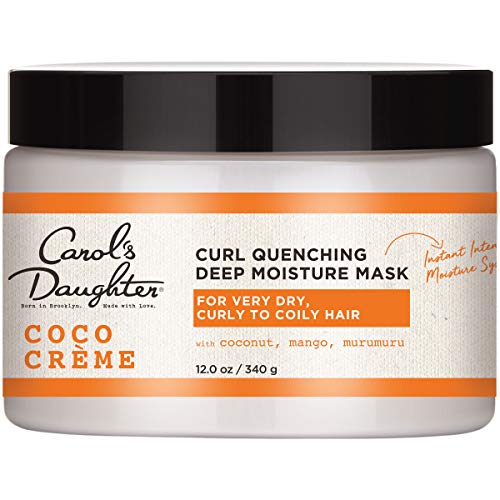
Carol’s Daughter Coco Creme Deep Moisture Mask
A heavy emollient base of coconut, mango, murumuru, and shea over cationic conditioners. It softens and smooths coarse, rough hair that loses its softness quickly.
Best for: Coarse, very dry curls that drink up richness. Will weigh down finer waves or looser curls.
Ingredients: Aqua/ Water/Eau, Cetearyl Alcohol, Cocos Nucifera (Coconut) Oil, Behentrimonium Chloride, Glyceryl Stearate SE, Butyrospermum Parkii (Shea) Butter, Parfum (Fragrance), Isopropyl Palmitate, Benzyl Alcohol, Isopropyl Alcohol, Sclerotium Gum, Caprylyl Glycol, Salicylic Acid, Mangifera Indica (Mango) Seed Butter, Astrocaryum Murumuru Seed Butter, Glycerin, Linalool, Coumarin, Cocos Nucifera (Coconut) Fruit Extract, Xanthan Gum, Potassium Sorbate, Tocopherol (Vitamin E), Citric Acid.
Curl Junkie Hibiscus & Banana Deep Fix
Softening without the weight of the richest masks: aloe, honey, murumuru and cupuaçu butters, and avocado and olive oils over cationic conditioners, with good slip. A nice option for curls that want softness but dislike very buttery formulas.
Best for: Dry, frizzy, medium-density curls wanting softness without heaviness.
Ingredients: Water/Aqua/Eau, Aloe Barbadensis (Aloe Vera) Leaf Juice, Cetyl Alcohol, Cetearyl Alcohol, Behentrimonium Methosulfate, Honey, Butyrospermum Parkii (Shea Butter) Fruit, Panthenol, Hibiscus Rosa Sinensis Linn (Hibiscus) Extract, Musa Sapientum (Banana) Fruit Extract, Hydrolyzed Oat Flour, Plantago Species (Plantain) Leaf Extract, Olea Europaea (Olive) Oil, Astrocaryum Murumuru Butter, Helianthus Annuus (Sunflower) Seed Oil, Persea Gratissima (Avocado) Oil, Macadamia Ternifolia (Macadamia Nut) Seed Oil, Theobroma Grandiflorum (Cupuacu) Seed Butter, Citrus Aurantium Dulcis (Orange) Peel Wax, Disodium Cocoamphodipropionate, PEG -7 Olivate, Disodium Cocoamphodiacetate, (Vegetable) Glycerin, Guar Hydroxypropyltrimonium Chloride, Phenoxyethanol, Caprylyl Glycol, Tetrasodium EDTA, Fragrance/Parfum, *Benzyl Benzoate. *Fragrance Component.

Best Protein-Free Deep Conditioners for Curly Hair
Hair is mostly keratin, but it is also dead tissue, so a protein in a conditioner does not nourish it the way nutrients feed living cells. Used at the right level, hydrolyzed proteins act as conditioning ingredients: a light film that improves the feel of damaged areas and cuts friction. The useful point is that they are not the only thing that can do that.
Cationic conditioners, fatty alcohols, oils, butters, and silicones create the same smooth, conditioned feel, which is why a protein-free deep conditioner can leave curls just as soft and manageable.
Protein-free is not better or safer, and protein is not something to avoid; these are simply good options if you like how a non-protein formula feels on your hair. Choose by how your curls feel, not by whether the label says “protein.”
Jessicurl Deep Conditioning Treatment
A lighter protein-free treatment with shea, avocado, and cocoa butter over cationic conditioners and botanical extracts, with a refreshing peppermint-rosemary feel. Softens without much buildup.
Best for: Fine to medium curls wanting softness without weight. Very damaged hair may also want a film-forming protein treatment in rotation.
Ingredients: Aqua (Water), Cetearyl Alcohol, Butyrospermum Parkii (Shea Butter), Persea Gratissima (Avocado) Oil, Theobroma Cacao (Cocoa) Seed Butter, Behentrimonium Methosulfate, Aloe Barbadensis (Aloe Vera) Leaf Juice Powder, Equisetum Arvense (Horsetail) Extract, Mentha Piperita (Peppermint) Leaf Extract, Rosmarinus Officinalis (Rosemary) Flower/Leaf/Stem Extract, Laurus Nobilis (Bay Laurel) Leaf Extract, Ocimum Basilicum (Basil) Leaf Extract, Urtica Dioica (Nettle) Leaf Extract, Arctium Lappa (Burdock) Root Extract, Althea Officinalis (Marshmallow) Root Extract, Origanum Vulgare (Oregano) Leaf Extract, Cymbopogon Flexuosus (Lemongrass) Extract, Thymus Vulgaris (Thyme) Leaf Extract, Salvia Officinalis (Sage) Leaf Extract, Lecithin, Cinnamal, Citral, Eugenol, Geraniol, Citronellol, Limonene, Linalool, Benzoic Acid, Dehydroacetic Acid, Phenoxyethanol.

Obia Naturals Babassu Deep Conditioner
Babassu oil is lighter than most butters, so this conditions finer hair without coating it heavily, with rice bran and avocado oils, glycerin, and panthenol for slip and softness.
Best for: Finer or wavy curls and lighter conditioning routines. Coarse or very damaged curls may need something richer.
Ingredients: Purified Water (Aqua), Oryza Sativa (Rice) Bran Oil, Cetyl Alcohol, Stearamidopropyl Dimethylamine, Stearyl Alcohol, Vegetable Glycerin, Orbignya Oleifera (Babassu) Seed Oil, Centrimonium Chloride, Persea Gratissima (Avocado) Oil, Panthenol, Gluconolactone and Sodium Benzoate, Aloe Barbadensis Leaf Extract, Rosmarinus Officinalis (Rosemary) Leaf Extract, Phthalate-Free Fragrance (Parfum).

Camille Rose Algae Renew Deep Conditioner
Marketed as strengthening, but the formula is really an emollient-rich conditioning mask: shea, cocoa, mango, coconut, and hemp over cationic conditioners. A good reminder that the label on the front does not always match what the formula does.
Best for: Coily, coarse, very dry curls wanting softness and slip. Heavy on fine, wavy hair
Ingredients: Deionized Water, Aloe Barbadensis Leaf Juice, Butyrospermum Parkii Butter, Cocos Nucifera (Coconut) Oil, Behentrimonium Methosulfate (BTMS), Cetyl Alcohol, Theobroma Cacao ( Cocoa) Seed Butter, Mangifera Indica (Mango) Seed Butter, Cannabis Sativa (Hemp) Seed Oil, Panthenol, (Honey) Mel, Vegetable Glycerin, Camellia Sinensis (Green Tea) Leaf Extract, Simmondsia Chinensis (Jojoba) Seed Oil, Rosa Canina (Rosehip) Fruit Oil, Vitis Vinifera (Grape) Seed Oil, Oenothera Biennis (Evening Primrose) Oil, Phenoxyethanol (Optiphen ND), Caprylyl Glycol, Blue Green Algae, Biotin, MSM, Tocopheryl Acetate (Vitamin E), Mentha Piperita (Peppermint) Oil, Phthalate Free Fragrance.

How To Apply A Deep Conditioner To Curly Hair

Getting more out of a deep conditioner is mostly about coverage, not soaking time:
- Start on freshly washed, towel-dried hair. Damp, not dripping, so the water in your hair is not diluting the product.
- Work it through in sections, concentrating on the lengths and ends where the most damage lives, and wherever your hair feels roughest.
- Detangle with your fingers or a wide-tooth comb while the hair is slippery; this is the easiest, lowest-breakage moment to do it.
- Add gentle warmth if you like, a cap or a warm towel. Heat does not force the product to penetrate deeper; it just helps it spread and coat evenly.
- Leave it about 10 to 20 minutes. Longer does not deep-condition more; the conditioning agents have done their job by then.
- Rinse well, then style. A cold rinse is not required; it does not seal the cuticle, despite the popular claim, so a comfortable temperature is fine.
How Often Should You Deep Condition CurlyHair?
It depends on your hair’s condition, your climate, and how much you style, so treat these as starting points, not rules:
- Dry or damaged curls: once or twice a week.
- Healthy curls: every one to two weeks.
- Fine or easily weighed-down hair: every two to three weeks.
- Heat-styled or color-treated hair: about weekly.
Then watch how your hair responds. If it turns limp, greasy, or hard to define, deep condition less often or switch to a lighter formula; that is a weight issue, not an “overload.”
Deep Conditioners and the Curly Girl Method
If you follow the Curly Girl Method, you may be steering clear of silicones, certain alcohols, and sulfates. Worth remembering: those are families of very different ingredients, not villains, and some damaged curls genuinely do better with silicones because they reduce friction and protect rough cuticles.[3]
The goal is healthier, more manageable hair, not rule-following for its own sake. Here is the fuller case on why the ingredient blacklist does not hold up.
Frequently Asked Questions
Do my curls need protein or moisture?
That is the wrong question, because every deep conditioner is a conditioning treatment and protein is just one kind of conditioning ingredient. There is no balance to maintain. Instead, look at what your hair is doing: if it feels stiff after protein it wants richer conditioning, and if it feels limp it is usually weighed down or built up. Match the formula to the behavior and watch how your curls respond.
Is protein overload real?
No. Hair feeling hard or brittle after a protein product is a sign it is under-conditioned, not that protein built up to a harmful level. The fix is a richer, more emollient treatment and easing off heavy protein for a while, not counterbalancing with moisture.
Can you over-moisturize curly hair?
Not in the “overload” sense people mean. Limp, mushy, undefined curls are usually weighed down by heavy product or buildup, which washes out, or simply by a formula that is too rich for your hair. The answer is a lighter treatment or a proper cleanse, not more protein to balance it out.
Are silicones bad in a deep conditioner?
No. Silicones reduce friction, add slip, and protect damaged hair from humidity and mechanical stress, which is exactly what rough, color-treated, or heat-damaged curls need. They wash out with a regular shampoo. They are optional, not harmful.
What is the difference between a deep conditioner, a hair mask, and a regular conditioner?
Mostly strength and contact time. A regular conditioner gives quick slip in the shower; a deep conditioner or mask is richer and sits longer, so more of its conditioning ingredients deposit. The terms “deep conditioner” and “mask” are largely interchangeable marketing. All three are conditioning, not repair.
How long should I leave a deep conditioner on?
About 10 to 20 minutes for most. Leaving it on for hours does not deep-condition more; the conditioning ingredients deposit and then simply sit there. Follow the directions on your jar and rinse well.
What is the best deep conditioner for fine curly hair?
Fine hair is easily weighed down, so reach for lighter formulas built on slip rather than heavy butters: things like Obia Naturals Babassu or Jessicurl. Apply mostly to the mid-lengths and ends, keep it off the roots, and rinse thoroughly. If your curls go flat or greasy, the formula is too rich or you are using too much, not “overloaded.”
What about low porosity hair?
Low porosity just means your cuticle is in good condition and lies flat, so product sits on the surface longer before it spreads. Favor lighter treatments, apply to damp hair, and use gentle warmth (a cap or warm towel) to help the conditioner move along the strand. This is about helping the product spread evenly, not forcing it to “penetrate,” and heavy butters that just sit on top are usually the ones that leave low porosity hair feeling coated.
References
1. Robbins CR. Chemical and Physical Behavior of Human Hair. 5th ed. Springer; 2012.
2. Rele AS, Mohile RB. Effect of mineral oil, sunflower oil, and coconut oil on prevention of hair damage. J Cosmet Sci. 2003;54(2):175–92.
3. Draelos ZD. Hair cosmetics and their mechanisms of action. Dermatol Clin. 2013;31(1):177–185.
4. Dias MFRG. Hair cosmetics: an overview. Int J Trichology. 2015;7(1):2–15.
Keep Reading